
Scotland Highlands Travel Guide
The Scottish Highlands are the kind of place that ruins every other landscape for you.
Below you will find everything from the best time to visit and how to get around to the villages, distilleries, and day hikes that make this corner of Scotland unforgettable.
1. When to Visit the Scottish Highlands
Fall, especially late September through October 2026, is arguably the sweet spot: the bracken turns gold and russet, the midges vanish after the first frost, and popular sights like the Isle of Skye feel half as busy as they do in August.
Spring offers lambing season and blooming gorse but changeable weather. If you are visiting in fall 2026, book accommodation early — autumn color season is getting more popular every year — and aim for the shoulder weeks of early to mid-October for the best balance of scenery, prices, and availability.

2. How to Get There and Getting Around
Most international visitors arrive via Edinburgh or Glasgow, both about three to four hours by road from the heart of the Highlands. Inverness, the Highland capital, has its own airport with connections from London and several European cities, and it is the most convenient gateway if your trip focuses on the north. From any of these cities you can pick up a rental car — by far the most flexible way to explore, since the best scenery lives along roads no bus will ever take you down.
If driving on the left feels daunting, the rail network is a genuine alternative for the highlights. The West Highland Line from Glasgow to Fort William and Mallaig is routinely called one of the most scenic rail journeys in the world, crossing Rannoch Moor and the famous Glenfinnan Viaduct. Coach tours from Edinburgh and Glasgow cover Loch Ness, Glencoe, and Skye in one to three days.

3. Glencoe and the Three Sisters
Glencoe is the Highlands in miniature: a deep, dramatic valley carved by glaciers and wrapped in legend. The Three Sisters — three steep ridges rising above the A82 — are the valley’s signature view, and the roadside pullouts along the main road put you right at their feet.
Walkers are spoiled for choice. The Lost Valley (Coire Gabhail) trail is a moderate two-to-three-hour hike into a hidden valley once used by the MacDonalds to hide stolen cattle, while more serious climbers can tackle Bidean nam Bian, the highest peak in the old county of Argyll. The Glencoe Visitor Centre, run by the National Trust for Scotland, is worth an hour for its thatched turf-roofed cottage reconstructions and the full story of the massacre. In fall 2026, come early in the morning when mist hangs in the corries and the ridges catch the first light.

4. Isle of Skye: Quiraing, the Storr, and Fairy Pools
The Isle of Skye is the Highlands’ greatest hits album — otherworldly landforms, sea cliffs, and a coastline that never sits still. The Quiraing, a landslip on the Trotternish Ridge, is the island’s most extraordinary walk: a landscape of pinnacles, hidden plateaus, and table-top formations like the Prison and the Needle. The full circuit takes four to five hours, but even the first mile from the car park delivers views that justify the drive alone.
The Old Man of Storr, a 50-meter basalt pinnacle, is Skye’s most photographed landmark and a stiff but rewarding 75-minute climb. Base yourself in Portree, the island’s colorful harbor town, and allow at least two full days. In October, book restaurants ahead: many close for winter at the end of the month.

5. Loch Ness and Urquhart Castle
Loch Ness needs no introduction, but it deserves more than the monster jokes. At 23 miles long and 754 feet deep, it holds more fresh water than all the lakes of England and Wales combined, and its dark, peat-stained water and steep wooded sides are genuinely atmospheric. The best way to experience it is from the water: cruises depart from Fort Augustus, Drumnadrochit, and Inverness, many with sonar equipment that lets you hunt for Nessie with a straight face.
Urquhart Castle, on the loch’s western shore near Drumnadrochit, is one of Scotland’s great ruins — a 13th-to-16th-century stronghold with a tower you can climb for sweeping views down the Great Glen. The visitor center’s short film dramatizes 500 years of clan warfare in a way kids actually enjoy. Fall mornings often bring mist sitting on the water, which is when the loch looks most like its legends.

6. Eilean Donan Castle
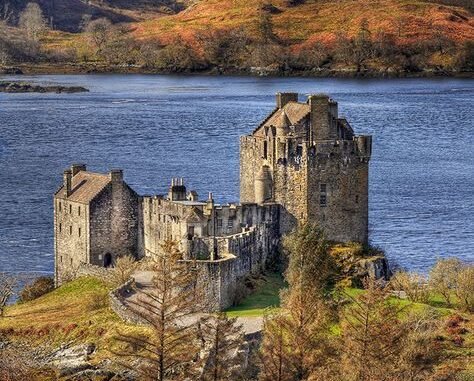
If one image defines Scotland to the world, it is Eilean Donan: a castle on a small tidal island where three sea lochs meet, reached by an arched stone bridge with the mountains of Kintail behind it. What surprises most visitors is that the castle you see is largely a 20th-century reconstruction — the original 13th-century fortress was destroyed by government ships during the Jacobite rising of 1719 and lay in ruins for nearly 200 years before Lieutenant Colonel John MacRae-Gilstrap rebuilt it between 1919 and 1932.
The approach matters as much as the visit: come from the west at sunset or arrive early on a still morning when the lochs act as mirrors. Eilean Donan sits at Dornie on the road to the Isle of Skye, making it a natural stop on any Skye itinerary. It is one of Scotland’s most visited paid attractions, so in peak season book tickets online in advance.

7. Glenfinnan Viaduct and the Jacobite Steam Train
Thanks to the Harry Potter films, the Glenfinnan Viaduct is now one of the most recognized railway bridges on earth — but its story is far older than the Hogwarts Express. Completed in 1901, this 21-arch concrete viaduct curves 100 feet above the valley floor as part of the West Highland Line, an engineering marvel built by “Concrete Bob” McAlpine. The hillside viewpoint above Loch Shiel fills every morning between April and October as the Jacobite steam train crosses, usually between 10:30 and 11 a.m.
Arrive at least 45 minutes early to claim a good spot, and walk the 15-to-20-minute trail from the National Trust visitor center to the main viewpoint. The monument at the head of Loch Shiel commemorates Bonnie Prince Charlie raising the Jacobite standard here in 1745 — climb it for one of the finest loch panoramas in Scotland.

8. Inverness: The Capital of the Highlands
Inverness is the Highlands’ only city and the natural hub for any northern itinerary. The castle — currently being transformed into a visitor attraction — overlooks the River Ness, and the riverside walk past the Ness Islands is one of the loveliest short strolls in Scotland. The Victorian Market in the old town is good for tweeds, whisky, and shortbread, while Leakey’s Bookshop, set in an old church, is worth a visit even if you never buy a book.
Use Inverness as your base for the Moray Firth dolphins at Chanonry Point, the Black Isle’s farm shops and breweries, and day trips to Loch Ness and Culloden. The city’s food scene punches above its weight: book a table at a riverside restaurant for Highland beef or fresh langoustines.

9. The North Coast 500 Road Trip
The North Coast 500 is Scotland’s answer to Route 66: a 516-mile loop from Inverness around the far north coast, taking in sea stacks, white-sand beaches, and some of the emptiest roads in Britain. The west coast section — from Applecross over the Bealach na Bà, one of the UK’s most dramatic mountain passes, to Ullapool and Durness — is the highlight, while the north coast adds the otherworldly sands of Balnakeil and the sea stacks at Duncansby.
Do not rush it: five to seven days is the minimum to do the route justice, and single-track sections demand patience and confident reversing into passing places. Book accommodation well ahead for fall 2026, as the route’s small B&Bs and inns fill fast during autumn color season. The payoff is some of the wildest, most cinematic coastline in Europe.

10. The Whisky Trail: Speyside Distilleries
No Scotland Highlands travel guide is complete without whisky, and the highest concentration of distilleries in the world sits in Speyside, on the eastern edge of the Highlands. The Malt Whisky Trail links working distilleries where you can watch barley become spirit in copper stills, nose your way through a tutored tasting, and learn why the water of the River Spey matters so much. Glenfiddich, Macallan, and Glenlivet are the famous names, but smaller distilleries often give the most personal tours.
Even if you never drink whisky, the tours are fascinating industrial history, and many distilleries have excellent restaurants and shops. Designate a driver or join an organized tour from Inverness or Elgin — the tasting pours are generous. And remember the golden rule of the tasting room: add a splash of water to open up the flavors, and never let anyone rush you past the nosing.

11. Ben Nevis and Fort William
At 4,413 feet, Ben Nevis is the highest mountain in the British Isles, and climbing it is a rite of passage for UK hikers. The Mountain Track from Glen Nevis is a straightforward but strenuous seven-to-nine-hour round trip — “straightforward” meaning the path is clear, not that it is easy. Weather changes violently near the summit even in summer, so carry full waterproofs, warm layers, food, and a map regardless of the forecast at the base. In October, expect the possibility of snow on the upper mountain and shorter daylight; start early and turn back if conditions deteriorate.
Fort William, the town at the mountain’s foot, calls itself the outdoor capital of the UK, and the claim holds up: mountain biking at Nevis Range, gorge walking, sea kayaking, and the start of the West Highland Way all sit within easy reach.

12. Highland Wildlife Watching
The Highlands are one of Europe’s best wildlife destinations, and fall is prime time. Red deer are at their most dramatic during the autumn rut — listen for stags roaring across the glens at dawn, a sound that raises the hairs on your neck. The Cairngorms are home to Britain’s only wild reindeer herd, which you can visit on guided hill trips, while golden eagles soar over remote glens and sea eagles — reintroduced after extinction — patrol the coasts of Mull and Skye.
Along the Moray Firth, bottlenose dolphins hunt salmon within sight of the shore at Chanonry Point, best seen on a rising tide. Red squirrels, pine martens, and if you are extraordinarily lucky, the elusive Scottish wildcat, inhabit the Caledonian pinewoods. Bring binoculars, keep your distance, and consider a guided wildlife tour — local guides know the territories and the light.

13. Where to Stay: Castle Hotels, Bothies, and Cozy B&Bs
Accommodation is part of the Highland experience. Castle hotels — from grand baronial piles to intimate tower-house conversions — let you sleep behind stone walls with a whisky by the fire, and many offer surprisingly reasonable off-season rates in October. At the other extreme, mountain bothies are unlocked stone shelters maintained by the Mountain Bothies Association: no booking, no fee, no facilities beyond a fireplace and a sleeping platform. They are free, wild, and unforgettable if you are prepared.
Between those poles sit the B&Bs and guesthouses that are the backbone of Highland tourism — book the ones with full Scottish breakfasts and drying rooms, because you will need both. Whatever you choose for fall 2026, book early: October half-term week fills everything, and the best-reviewed small places are often reserved months ahead.

14. What to Eat and Drink in the Highlands
Highland food is hearty, local, and far better than its reputation. Start with the full Scottish breakfast — Lorne sausage, tattie scones, black pudding, and eggs — the fuel of champions. Haggis divides visitors until they actually taste it; try haggis, neeps, and tatties in a pub before deciding. Seafood is the real star: west-coast langoustines, hand-dived scallops, smoked salmon, and mussels from lochs you can see from your table.
Venison appears on menus across the region, often from estates you drove past that afternoon. For drinking, beyond the obvious whisky, try the growing craft beer scene and local gins flavored with Highland botanicals. Farm shops along the main routes sell tablet (a crumbly Scottish fudge), crowdie cheese, and oatcakes worth packing for picnics.

15. What to Pack for the Highlands
The old Scottish saying — “there’s no such thing as bad weather, only bad clothing” — was written for the Highlands. Pack layers: a waterproof and windproof outer shell is non-negotiable, even if the forecast looks kind. Add a warm mid-layer, quick-dry hiking trousers, sturdy waterproof boots with ankle support, and a hat and gloves from October onward. The weather can swing from sunshine to sideways rain within an hour, and being comfortable through the swings is the difference between a great day and a miserable one.
Beyond clothing, bring midge repellent for early fall trips (they fade after the first frosts), a headlamp for the short October days, a portable charger, and a paper map as backup — GPS fails in the glens. If you plan bothies or remote walks, add a sleeping bag, stove, and water purification. Pack light enough to move fast, but never so light you are betting against the Highland sky.

16. Loch Lomond and the Trossachs
Often called the Highlands in miniature, Loch Lomond and the Trossachs National Park sits just 40 minutes from Glasgow, making it the easiest Highland taste for short trips. Loch Lomond itself is Britain’s largest lake by surface area, dotted with islands and framed by mountains that grow wilder as you travel north along its western shore. The village of Luss, with its slate cottages and flower-filled gardens, is the classic photo stop.
The Trossachs — “the Highlands in miniature” in Sir Walter Scott’s phrase — offer forest drives, the Lake of Menteith, and the steamship Sir Walter Scott on Loch Katrine. In fall 2026, the park’s mixed woodlands put on one of Scotland’s finest autumn color displays, easily combined with a day trip from Glasgow or Edinburgh.

17. Culloden Battlefield and Clava Cairns
Some places in the Highlands carry a weight you feel before anyone explains it, and Culloden is one of them. On this moor in April 1746, the Jacobite army of Bonnie Prince Charlie was destroyed in under an hour — the last pitched battle on British soil. The visitor center tells the story from both sides with unusual fairness, and the battlefield itself, with its clan grave markers and the great memorial cairn, is profoundly moving in the low light of an October afternoon.
Four miles east, the Clava Cairns are a 4,000-year-old Bronze Age cemetery of passage graves, ring cairns, and standing stones — older than Stonehenge’s final form and, yes, the inspiration for the fictional Craigh na Dun. Visit at different times of day: the midwinter alignment was deliberate, and the stones photograph beautifully in slanted autumn light.

18. Day Trips: Oban, Mull, and Iona
Oban, the “Gateway to the Isles,” is the Highlands’ great ferry port and seafood capital — the town’s seafood shacks by the harbor serve langoustines and crab sandwiches worth the detour alone. From here, CalMac ferries run to Mull, where Tobermory’s painted waterfront, the white sands of Calgary Bay, and sea-eagle watching make a superb two-day side trip. Mull’s single-track roads and slow pace are the Highlands distilled.
From Mull, a short ferry reaches Iona, the tiny island where St. Columba founded his monastery in 563 AD and Christianity spread through Scotland. Iona Abbey, rebuilt in the early 1900s, and the island’s white beaches carry a stillness visitors describe for years afterward. Ferries need booking well ahead for cars in season, though foot passengers rarely have trouble.

19. Budget Tips: What a Highlands Trip Costs
The Highlands can be done on very different budgets. A mid-range fall 2026 trip typically runs $150–$250 per person per day including a rental car, B&B accommodation, pub meals, and paid attractions — less if you self-cater, more if castle hotels are on the agenda. Fuel is the sneaky expense: distances are long and rural petrol costs more than in the cities, so budget generously and fill up whenever you can.
Save money by traveling in early October rather than summer, booking B&Bs directly (many offer better rates than booking sites), and packing picnic supplies from supermarkets in Inverness or Fort William — Highland cafés are charming but add up. Many of the best experiences are free: the viewpoints, the beaches, the bothies, the battlefield moors. Distillery tours range from free tastings to premium cask experiences, so pick one splurge.

20. A Perfect 7-Day Highlands Itinerary
Day 1: Arrive in Inverness, explore the river and castle viewpoint, overnight in the city. Day 2: Loch Ness and Urquhart Castle in the morning, Culloden and Clava Cairns in the afternoon, overnight Inverness. Day 3: Drive the A9 and A82 south through the Cairngorms to Fort William, stopping at viewpoints; optional Ben Nevis gondola. Day 4: Glencoe in the morning light — Lost Valley walk — then on to Glenfinnan for the viaduct and monument.
Day 5: Eilean Donan Castle, then cross to the Isle of Skye for the afternoon; overnight in Portree. Day 6: Full Skye day — Quiraing, Old Man of Storr, Fairy Pools if time allows. Day 7: Return via Loch Lomond and the Trossachs to Glasgow or Edinburgh.

The Scottish Highlands do not try to impress you — they simply are impressive, in a way that feels older and quieter than almost anywhere else in Europe. Come in fall 2026, when the hills burn copper and the crowds go home, and you will understand why people cross oceans for a landscape that mostly just sits there being itself. Drive slowly, stop often, talk to locals in pubs, and let the weather have its way. The Highlands have been here for millions of years; they are in no hurry, and once you visit, neither will you be.
Leave a Reply