
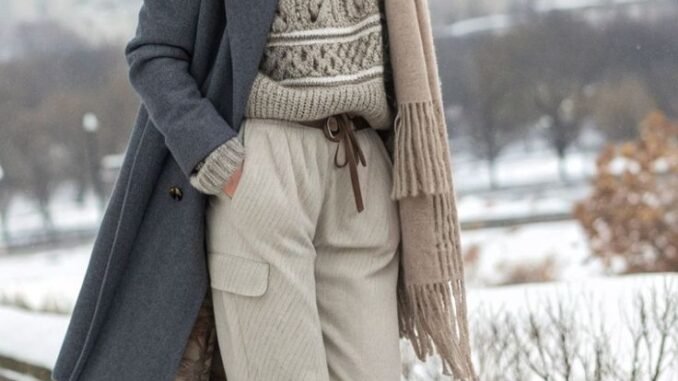
Winter dressing is a balancing act: you want to stay genuinely warm without disappearing inside bulky layers, and you want to look like yourself rather than a walking blanket. The best cold winter outfits solve both problems at once, using smart layering, good coats, and textures that add interest even when the palette stays simple. This guide brings together twenty practical ideas, from the long wool coat that anchors almost any outfit to the weekend layers that keep you comfortable all day. Each idea is easy to adapt to your own closet, your climate, and your daily routine, whether you face light frost or deep snow. Use these outfits as a starting point, mix the pieces you already own, and build a winter wardrobe that feels warm, flattering, and unmistakably yours.
The Long Wool Coat Formula
A long wool coat is the easiest way to look polished on a freezing day, because it covers almost everything underneath it and instantly pulls an outfit together. Choose a coat that falls below the knee, with a clean silhouette and enough room for a thick sweater underneath, and you will find that even simple jeans and boots suddenly look intentional. Neutral shades such as charcoal, camel, and navy are the most versatile, since they work with almost any color already in your closet. Keep the rest of the outfit simple: dark denim, a warm knit, and sturdy boots let the coat do the talking. A long scarf adds both warmth and a soft finishing layer, while gloves and a structured bag keep the look practical. This formula works for city errands, office days, and evening plans alike.
For the coldest days, add thermal leggings under your trousers and a thin base layer under your sweater; these invisible layers add real warmth without changing the shape of the outfit. A coat with a high collar or a hood is also worth choosing, since it protects your neck and face from wind. When you invest in a long wool coat, choose one you can wear for several winters, because a classic cut will not date quickly.

The Puffer Coat That Actually Flatters
Puffer coats have a reputation for hiding your shape, but the right one can be both warm and flattering if you pay attention to fit and length. Look for a puffer with a defined waist, a longer line that covers the hips, or vertical quilting that creates a leaner visual line. A matte finish usually looks more refined than a shiny one, and a hood that sits neatly behind the neck adds warmth without bulk. Pair a longer puffer with slim trousers or leggings and boots, so the proportions stay balanced rather than boxy. If you prefer a cropped puffer, wear it with high-waisted trousers to keep the silhouette long. The goal is warmth first, but there is no reason a practical coat cannot also look sharp.

Chunky Knit Sweaters as the Star
When the temperature drops, a chunky knit sweater can carry an entire outfit, and it deserves to be treated as the centerpiece rather than an afterthought. A thick cable-knit or oversized crewneck adds texture and warmth, and it pairs beautifully with everything from leather trousers to a simple midi skirt. Choose a sweater in cream, oatmeal, or a rich seasonal color, and keep the bottom half streamlined so the knit does not overwhelm your frame. Tucking just the front into high-waisted jeans creates shape, while leaving it loose over leggings feels relaxed and cozy. Add ankle boots and a long coat, and you have a look that is comfortable enough for a full day out and stylish enough for lunch with friends.

Turtlenecks for Effortless Warmth
A good turtleneck is the hardest-working piece in a winter wardrobe, because it adds warmth, covers the neck, and looks elegant without any effort. A fitted ribbed turtleneck works as a base layer under blazers, coats, and dresses, while a chunkier version can stand on its own with trousers or a skirt. Black, cream, and grey are the easiest colors to layer, but a deep burgundy or forest green turtleneck can add richness to an otherwise neutral outfit. The key is fit: it should sit close to the neck without feeling tight, and the sleeves should be long enough to layer under a coat. With a turtleneck as your base, getting dressed on a cold morning becomes much simpler.

The Camel Coat, Styled Five Ways
A camel coat is a classic for a reason, and it earns its place in a winter wardrobe by working with almost every outfit you already own. For a casual day, wear it over jeans, a white sweater, and sneakers, and let the coat add the polish. For work, layer it over tailored trousers and a turtleneck, with heeled boots to finish the look. Over a dress, it softens the outfit and adds warmth without hiding the shape of the dress. With all-black underneath, a camel coat becomes the focal point, brightening a dark winter palette. Even with leggings and a long knit, it makes a relaxed outfit look considered, which is why it remains a favorite season after season.
When you shop for a camel coat, check the weight of the wool and the quality of the lining, since a well-lined coat will feel warmer and last longer. A single-breasted style is usually more versatile for everyday wear, while a double-breasted coat can feel more formal. Either way, camel works best when the rest of the outfit stays in soft neutrals or deep, muted colors.

Leather Trousers for Cold Days
Leather trousers are a surprisingly practical choice for cold weather, because they block wind, hold their shape, and instantly make a simple sweater look more polished. Choose a pair with a straight or slightly relaxed leg, and pair them with an oversized knit tucked loosely at the front for balance. Ankle boots work well with a cropped length, while knee-high boots suit a longer, slimmer cut. Black leather is the most versatile, but brown or burgundy leather can warm up a neutral winter outfit. A long coat over the top keeps the look sleek, and the combination feels both edgy and refined. Leather trousers prove that winter dressing does not have to mean bulky layers and shapeless silhouettes.

The All-Neutral Winter Palette
Dressing in all neutrals is one of the simplest ways to look expensive in winter, because tones of cream, beige, grey, and camel blend together without competing. The trick is to mix textures rather than colors: pair a wool coat with a chunky knit, leather boots, and a soft scarf, and the outfit gains depth even though the palette stays calm. Different shades of the same family, such as ivory with oatmeal and taupe, create a soft, layered effect that photographs beautifully. Add one darker neutral, like charcoal trousers or chocolate boots, to ground the look and stop it from washing you out. Neutral dressing also makes getting dressed faster, since almost everything in the palette works together.

Bold Color in a Grey Season
Winter does not have to mean a wardrobe of only black and grey, and a bold coat or sweater can completely change how a cold day feels. A red coat over black trousers is striking without being difficult to wear, while a bright sweater under a neutral coat adds color exactly where it shows. If bold color feels intimidating, start with accessories: a vivid scarf, colorful gloves, or a bright bag can lift an otherwise dark outfit. The key is to let one bold piece lead and keep the rest of the outfit quiet, so the color looks intentional rather than accidental. A single strong color also makes winter photos more interesting, and it is a simple way to stand out in a season of muted tones.

Snow-Day Layers That Still Look Good
On a true snow day, warmth has to come first, but that does not mean style has to disappear entirely. Start with a thermal base layer, add a warm sweater, and finish with a waterproof coat that covers the hips. Leggings or lined trousers keep legs warm, while insulated boots with good grip handle icy sidewalks safely. A chunky knit hat, a long scarf, and insulated gloves complete the practical side, and choosing them in coordinating colors keeps the outfit looking thoughtful. A crossbody bag leaves your hands free, and a coat with a hood protects against falling snow. When every layer is chosen with both warmth and color in mind, even a snow-day outfit can look put together.

The Teddy and Faux-Fur Coat
Teddy and faux-fur coats are the coziest option in a winter wardrobe, and they bring instant softness to any outfit. A teddy coat in cream or camel works over almost everything, from jeans and a sweater to a simple dress and boots. Because these coats are naturally bulky, keep the layers underneath relatively slim, and choose a length that suits your height: a mid-length coat is flattering on most people, while a long version feels more dramatic. Pair it with dark trousers and boots to balance the softness, and add a simple bag rather than a busy one. A faux-fur coat is also a good evening option, since it looks luxurious over a dress and adds warmth without a heavy, structured coat.
If you walk a lot in winter, choose boots with a rubber sole and a low, stable heel, and keep a pair of smarter shoes at the office if needed. A waterproof spray for suede and leather boots is a small step that protects your investment through slush and snow. These practical choices do not show in photos, but they make a real difference to how comfortable a winter outfit feels by the end of the day.

Knee-High Boots and Skirts
Knee-high boots are a winter staple because they add warmth, lengthen the leg, and work with skirts and dresses that might otherwise feel too cold for the season. Pair them with a midi skirt and a chunky sweater for a balanced outfit, or with a shorter skirt, tights, and a long coat for colder days. Black boots are the most versatile, but brown suede boots soften a winter outfit and work beautifully with cream, camel, and burgundy tones. Make sure the boots fit comfortably over tights, and choose a heel height you can walk in all day. With the right boots, a skirt becomes a genuine winter option rather than something saved only for warmer months.

Denim That Works in Winter
Denim does not have to be put away when winter arrives, but it does need a few adjustments to work in cold weather. Choose a darker wash, which looks more polished and pairs better with winter coats and boots, and consider a straight or slightly relaxed fit that leaves room for thermal leggings underneath on the coldest days. Pair jeans with a chunky sweater, a long coat, and boots, and the outfit stays warm while still feeling casual. A denim skirt can also work in winter with tights and knee-high boots. The key is to treat denim as a base rather than the whole outfit, and to let warmer layers, such as a wool coat and a scarf, do the heavy lifting for both style and warmth.

Scarves, Hats, and Gloves That Finish the Look
Winter accessories are not just practical; they are the details that make an outfit feel complete. A long wool scarf in a neutral or plaid pattern adds warmth and a layer of texture, and it can be wrapped, draped, or knotted depending on the coat. A knit beanie keeps you warm on the coldest days, while a structured hat can elevate a coat outfit for a smarter occasion. Leather gloves look polished and last for years, while knit gloves are softer and easier for everyday wear. Choosing accessories in colors that coordinate with your coat, rather than matching exactly, creates a thoughtful look. Small details like these are often what separate a good winter outfit from a great one.

The Oversized Coat, Proportioned Right
An oversized coat can look effortlessly cool, but only when the proportions underneath are balanced. If the coat is roomy and long, keep the trousers slim and the boots sleek, so the outfit does not become one large shape. If the coat is oversized but cropped, high-waisted trousers help keep the silhouette long. Rolling the sleeves slightly can show a sliver of sweater and stop the coat from swallowing your frame. A simple outfit underneath, in one or two colors, also helps an oversized coat look intentional rather than accidental. The appeal of an oversized coat is its relaxed confidence, and the right proportions let that confidence come through without losing your shape entirely.

Monochrome Dressing for Winter
Wearing one color from head to toe is a simple trick that makes winter outfits look longer, leaner, and more polished. An all-black outfit, for example, can look sleek rather than flat if you mix textures such as wool, leather, and knit. All-cream or all-camel outfits feel soft and expensive, especially when the coat, sweater, and boots are in slightly different tones of the same family. Monochrome dressing also simplifies getting dressed, since you do not have to worry about whether colors clash. Add interest with texture, a belt, or a contrasting bag, rather than a second color. The result is an outfit that looks deliberate and elegant, even on the busiest winter morning.
Try the same monochrome outfit with different coats to see how much the outer layer changes the mood: a long wool coat feels formal, a puffer feels casual, and a faux-fur coat feels glamorous. This flexibility is why monochrome dressing is so useful in winter, when the coat is often the most visible part of the outfit. Keep your bag and boots in the same color family for the most streamlined effect.

Work-Ready Cold Weather Looks
Getting dressed for work in winter means balancing professionalism with warmth, and the best outfits do both without compromise. A tailored coat over a suit, a turtleneck under a blazer, and closed-toe boots that can handle a cold commute are the foundation. Choose trousers in a heavier fabric, such as wool, and pair them with a structured top rather than a bulky sweater that hides the shape of the outfit. A midi skirt with tights and knee-high boots can also work for the office, especially with a long coat. Keep colors professional but not dull: navy, charcoal, camel, and burgundy all look smart in winter. The goal is an outfit that feels warm outdoors and polished once you arrive.

Weekend Casual Winter Outfits
Weekend winter outfits should feel relaxed, warm, and easy to wear for hours, whether you are running errands, meeting friends, or going for a walk. Start with comfortable jeans or leggings, add a warm sweater, and finish with a practical coat and boots you can walk in. A puffer coat or a teddy coat works well for weekends, since both are warm and forgiving over casual layers. A crossbody bag, a knit hat, and gloves keep the outfit practical, and a scarf adds both warmth and color. Weekend dressing is also a good time to try softer colors and cozier textures, since there is no office dress code to consider. Comfort comes first, but a few thoughtful choices keep the outfit looking good too.

Evening Winter Outfits
Winter evenings call for outfits that feel special while still keeping you warm on the way there and back. A velvet or satin dress with a long coat, tights, and heeled boots is a classic combination, and a faux-fur coat over a simple dress adds glamour instantly. If dresses are not your style, tailored trousers with a silk top and a structured coat can feel just as evening-ready. Dark, rich colors such as burgundy, navy, and emerald suit winter evenings, and a little sparkle from earrings or a clutch adds a festive touch. The coat matters as much as the outfit underneath, since it is what people see first, so choose one that complements the evening look rather than hiding it.

Winter Outfits for Travel Days
Travel days in winter need outfits that are warm, comfortable, and easy to move in, without looking sloppy at the airport or station. Choose stretchy trousers or leggings, a long sweater or turtleneck, and a coat that is warm but not too bulky to carry. Slip-on boots or comfortable sneakers make security and walking easier, and a large scarf can double as a blanket on a long journey. Layers are essential, since temperatures change between outdoors, transport, and heated buildings. A structured tote or backpack keeps essentials organized, and darker colors hide the wear of a long day. The best travel outfit is one you can sit in for hours and still feel good wearing when you arrive.

Building a Capsule for the Coldest Months
A winter capsule wardrobe saves time, money, and closet space, because a small number of versatile pieces can create many outfits. Start with a long wool coat, a practical puffer, and a teddy coat for different temperatures and occasions. Add three or four sweaters in neutral colors, two pairs of trousers, one good pair of jeans, and boots in black and brown. Scarves, hats, and gloves in coordinating colors multiply the combinations without adding bulk to the closet. When every piece works with almost every other piece, getting dressed becomes faster and less stressful. A capsule also makes it easier to spot what is truly missing, so future purchases are more thoughtful. By the end of winter, you will know exactly which pieces earned their place, and which ones can be replaced next year with something better.
Before you buy anything new, try building outfits from your capsule for a full week and note where you feel cold, uncomfortable, or bored. Those notes tell you exactly what to add next, whether it is a warmer coat, better boots, or a sweater in a color you actually enjoy wearing. A capsule that grows slowly, based on real use, will always serve you better than a wardrobe bought all at once.

Leave a Reply