
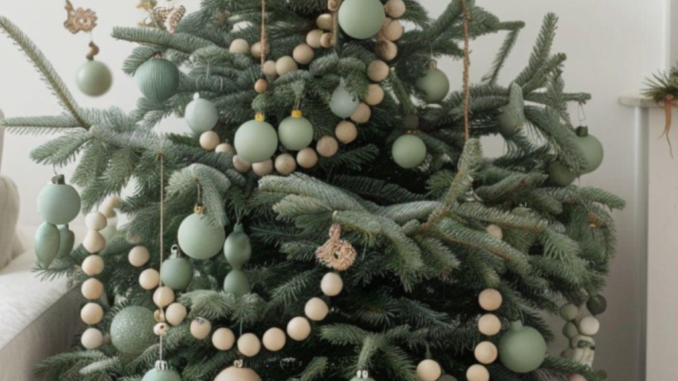
Sage Green Christmas Tree
A sage green Christmas tree is one of the calmest, prettiest ways to decorate for the holidays. Soft, natural, and endlessly versatile, sage green brings a sense of peace to a busy season while still looking special once the lights come on. In this guide, you will learn how to choose the right tree, build a beautiful sage palette, pair it with gold, cream, and silver, and style every detail from the topper to the base. Whether your home is farmhouse, modern, or somewhere in between, these ideas will help you create a tree that feels thoughtful, welcoming, and completely your own.
What Makes Sage Green So Special at Christmas
Sage green has quietly become one of the most loved colors for holiday decorating, and it is easy to see why. It sits somewhere between gray and green, soft enough to feel calm and natural, yet rich enough to look special once the lights go on. Unlike bright red or deep emerald, sage green does not shout for attention. Instead, it creates a peaceful background that lets ornaments, ribbons, and warm light do the talking, which is exactly what many homes want during a busy season.

Another reason sage green works so well is that it pairs with almost everything. It looks beautiful with cream, gold, silver, wood tones, and even blush pink, so you are never locked into one single look. Whether your home leans farmhouse, modern, or classic, a sage green Christmas tree can fit right in. It also photographs beautifully, which matters if you love sharing your home at the holidays, and it feels fresh year after year rather than tied to one passing trend.
Choosing the Right Tree: Real, Artificial, or Flocked
Before you buy a single ornament, decide what kind of tree will carry your sage green theme. A real fir or spruce brings a wonderful scent and a natural, slightly uneven shape that suits the relaxed feel of sage green perfectly. If you go this route, look for full branches with room between them, because that space is what lets ribbons and larger ornaments show up well. Keep it watered daily so the needles stay soft and green through the season.

An artificial tree, on the other hand, gives you total control over shape and fullness, and you can reuse it for years. A flocked tree, dusted with artificial snow, is a particularly good match for sage green, because the white tips soften the green and make sage ornaments look almost luminous. Whichever tree you choose, aim for a height that leaves at least six inches between the topper and the ceiling, and check that the base is sturdy before you start decorating.
The Sage Green Color Palette, Explained
Sage green is not one single shade, and understanding its range will help you shop with confidence. True sage is a muted, grayish green, lighter than olive and softer than forest green. Some sage ornaments lean warm, with a hint of yellow, while others lean cool, with a touch of gray or blue. Mixing two or three close shades of sage actually looks more natural and layered than using one flat color everywhere, so do not worry about matching every ornament exactly.

To build your palette, start with sage as your main color, then add one light neutral, such as cream or ivory, and one metallic, such as gold or champagne. That trio covers most of the tree. You can then add small accents in a deeper green, soft white, or natural wood for depth. If you ever feel unsure in a store, hold ornaments next to each other under warm light rather than harsh store lighting, since warm light is how they will look at home.
Sage Green and Gold: A Classic Pairing
If there is one combination that never fails with sage green, it is gold. The warmth of gold lifts the cool softness of sage and gives the whole tree a gentle glow, especially in the evening when the lights come on. Gold ornaments in matte, shiny, and glitter finishes add variety without adding new colors, which keeps the tree looking calm and pulled together rather than busy.

To use this pairing well, spread gold evenly from top to bottom instead of clustering it in one spot. Start with a few larger gold baubles deep inside the branches, then add medium and small ones toward the tips. A gold ribbon or a thin gold garland can tie the whole look together, and a gold topper or a simple gold star finishes it beautifully. If gold feels too bold for your taste, champagne is a softer cousin that gives the same warmth with less shine.
Sage Green and Cream for a Soft, Calm Look
For the calmest possible version of this theme, pair sage green with cream and ivory. Cream softens every edge, and the result feels like a quiet winter morning: gentle, airy, and restful. This combination is ideal for bedrooms, small living rooms, and homes where you want the holidays to feel peaceful rather than dramatic. It also works wonderfully in rooms with lots of natural light.

The trick with a cream and sage tree is texture. Because the colors are so close in tone, you need different finishes to keep things interesting: matte cream baubles next to shiny sage ones, soft fabric ribbons next to frosted branches, and natural wood ornaments next to glass. Add warm white lights rather than cool white ones, since warm light keeps cream looking creamy instead of gray, and finish the base with a cream or natural linen tree skirt.
Sage Green and Silver for a Frosty Finish
If you prefer a cooler, more wintery feel, silver is the metallic to reach for. Sage green and silver together look like frost on leaves, especially on a flocked tree. The silver adds sparkle and a hint of glamour, while the sage keeps everything grounded and natural, so the tree never feels cold or stark.

Balance is important here. Too much silver can wash out the sage, so use silver as an accent rather than the main event. A good rule is roughly two sage ornaments for every silver one, with silver showing up in ribbons, icicles, and a few standout baubles. Cool white lights suit this version well, and a silver or crystal topper completes the frosty look. A few white or pale blue ornaments can be added, but keep them small so the sage stays the star.
Ornaments That Carry the Sage Theme
Ornaments are where your sage green theme truly comes to life, and variety matters more than quantity. Start with a base set of sage baubles in three sizes: large for depth, medium for the main coverage, and small to fill gaps near the branch tips. Then add a handful of statement ornaments in cream, gold, or natural materials that catch the eye and give the tree personality.

Natural and handmade ornaments suit sage green especially well. Think wooden beads, dried orange slices, pinecones, felt shapes, and simple glass drops. These materials echo the earthy, garden feel of sage and stop the tree from looking too perfect or store-bought. Hang heavier ornaments closer to the trunk where branches are stronger, and save the lightest, prettiest pieces for the outer tips where they can be seen. Step back every few minutes as you work to check the balance.
Ribbons, Bows, and Garlands in Sage Tones
Ribbon is the secret weapon of a beautiful sage green tree, because it adds flowing lines and soft color in a way ornaments alone cannot. A wide sage green ribbon, woven in and out of the branches in loose loops, instantly makes a tree look professionally decorated. You can also use a narrower ribbon in cream or gold layered over the sage for extra depth.

For bows, keep them simple and a little loose rather than stiff and perfect. A relaxed, slightly rustic bow suits the natural feel of sage green better than a sharp, formal one. Garlands offer another option: wooden bead garlands add warmth, while a simple greenery or eucalyptus garland blends right into the branches. Whichever you choose, add ribbon and garland before the smaller ornaments, so you can tuck ornaments around them instead of covering them up.
Lighting That Makes Sage Green Glow
Lighting can make or break a sage green tree, because sage is a soft color that needs warmth to shine. Warm white lights are almost always the best choice, since they bring out the gentle green tones and make gold and cream ornaments glow. Cool white lights can make sage look gray and flat, so save those for a silver-heavy tree where the frosty look is intentional.

As a guide, plan for about one hundred lights per foot of tree height, and wrap them from the inside of the branches outward so the glow comes from deep within the tree rather than just sitting on the surface. Battery-operated lights are handy for small trees and tabletop trees, while plug-in strands with a timer save you from remembering to switch the lights on and off. Always test every strand before you hang it, because replacing a dead strand after decorating is no fun at all.
Toppers That Finish the Look
The topper is the finishing touch, and with sage green you have plenty of good options. A simple gold or champagne star is a classic choice that ties in with gold ornaments. A soft sage bow, made from wide ribbon with long tails, gives a relaxed, modern feel. For a rustic tree, a natural star made from twigs or wood looks right at home.

Whatever topper you choose, make sure it is in proportion to your tree. A huge topper on a small tree looks top-heavy, while a tiny topper on a tall tree disappears. If your tree is slim, choose a lighter topper so it does not bend the top branch. Secure the topper firmly, especially if you have pets or small children, and step back to check that it sits straight before you call the tree finished.
Styling the Base: Skirts, Collars, and Baskets
The base of the tree is easy to forget, but it makes a big difference to the finished look. A tree skirt in cream, natural linen, or soft sage covers the stand and gives you a pretty surface for presents. A woven basket or a galvanized metal collar offers a more modern, tidy alternative, and both suit the natural feel of sage green very well.

If you use a basket, make sure the tree stand fits securely inside it and the tree cannot tip. A collar works best with artificial trees, since it hides the stand completely. Whichever option you pick, keep the area around the base simple: a few wrapped gifts in cream, kraft paper, and sage ribbon will look far better than a cluttered pile of shiny boxes. The base should feel like part of the decoration, not an afterthought.
Sage Green Trees in Small Spaces
A sage green theme is a gift for small spaces, because its soft colors make a room feel larger and calmer rather than crowded. A slim or pencil tree fits neatly into a corner, and a tabletop tree works beautifully on a side table, a console, or even a kitchen counter. The key is to scale your ornaments down: use smaller baubles and fewer large pieces so the tree does not look overloaded.

In a small room, keep the rest of the decor simple so the tree can shine. A single sage garland on a shelf, a couple of candles, and a cream throw are plenty. Avoid filling every surface with decorations, since that makes a small space feel busy. Instead, let the tree be the star, and use mirrors or light-colored walls to bounce the warm light around the room. Even a tiny sage tree can feel special when it is decorated with care.
A Sage Green Tree for a Farmhouse Living Room
Farmhouse style and sage green were made for each other. Both celebrate natural materials, soft colors, and a relaxed, lived-in feeling. In a farmhouse living room, pair your sage tree with wooden bead garlands, burlap ribbon, pinecones, and simple cream ornaments. A galvanized bucket or a woven basket as the base completes the look perfectly.

Around the room, keep the same palette going with a plaid throw in cream and green, a few candles on the mantel, and a simple evergreen garland. Avoid anything too shiny or formal, since farmhouse style is about comfort. The beauty of this look is that it never feels overdone: it looks like a home that is ready for family, friends, and long evenings by the fire, which is exactly what the holidays should feel like.
A Modern, Minimalist Sage Green Tree
If your taste runs modern and minimal, sage green is an excellent choice, because it is quiet enough to suit a pared-back room. For this look, use fewer ornaments but choose them carefully: a set of matte sage baubles, a few cream pieces, and one simple metallic accent are all you need. Space the ornaments evenly and resist the urge to fill every gap.

A slim, unflocked artificial tree in a simple pot or a plain stand works best for a minimalist room, and a single strand of warm lights is enough. Skip the tinsel and the busy garlands, and let the shape of the tree itself do the work. The result is calm, elegant, and easy to live with all season, and it pairs beautifully with neutral furniture, pale wood, and clean lines throughout the room.
Sage Green Trees for a Rustic Cabin Feel
For a rustic cabin feel, lean into texture and nature. Sage green ornaments mixed with pinecones, dried oranges, cinnamon sticks, and wooden stars create a tree that smells wonderful and looks like it belongs in a lodge. A real tree is ideal here, since its natural scent and shape add to the cabin atmosphere.

Add a chunky knit tree skirt or a faux fur throw at the base, and use warm, slightly dim lighting to create a cozy glow. Around the room, plaid blankets, wooden candle holders, and a simple evergreen wreath on the door will carry the theme further. This is a forgiving style: it looks better slightly imperfect, so do not stress about symmetry. A rustic sage tree should feel gathered and loved, not styled to perfection.
Matching Your Tree to the Rest of the Room
A tree looks its best when it feels connected to the room around it, and that does not require redecorating your whole house. Just repeat the sage green theme in two or three small places: a sage cushion on the sofa, a sage ribbon on the mantel garland, and sage wrapping paper on a few gifts will tie everything together without much effort.

Also pay attention to the colors already in your room. Sage green works with warm wood, cream walls, gray sofas, and natural stone, but it can clash with very bright or bold wall colors. If your room has strong colors, use more cream and gold on the tree to bridge the gap. Stand in the doorway and look at the whole room together: if the tree feels like it belongs, you have got it right.
DIY Sage Green Ornaments and Touches
Making a few ornaments yourself is a lovely way to personalize a sage green tree, and it does not need to be complicated. Paint plain wooden baubles in sage and cream, or wrap foam balls in sage fabric scraps tied with twine. Dried orange slices, baked until crisp, look beautiful against sage branches, and cinnamon sticks tied in small bundles add scent as well as color.

Salt dough ornaments are another easy project, especially with children: cut stars, trees, and hearts, bake them, and paint them in sage, cream, and gold. Keep homemade ornaments light so they do not pull branches down, and seal painted pieces so the color lasts. A few handmade touches mixed with store-bought ornaments give the tree character and make it truly yours, and they often become the pieces you treasure most.
Storing Your Sage Green Decorations Safely
When the season ends, good storage protects your sage ornaments for next year. Wrap glass and delicate ornaments individually in tissue paper, and store them in divided boxes so they do not knock together. Keep ribbons rolled rather than folded, since folds can leave permanent creases, and store everything in a cool, dry place away from direct sunlight, which can fade sage tones over time.

Label each box clearly, and keep a short note of what worked well this year: which ribbon you used, how many ornaments you needed, and anything you want to add next time. That note will save you time and money next December. Artificial trees should be stored in their original box or a tree bag, with branches gently compressed rather than forced, so they fluff up easily when you unpack them again.
Common Sage Green Tree Mistakes to Avoid
A few common mistakes can dull an otherwise beautiful sage tree, and they are all easy to avoid. The first is using too many colors: adding red, blue, and purple alongside sage turns a calm theme into a rainbow. Stick to sage plus one neutral and one metallic, and the tree will look intentional. The second mistake is using only one size of ornament, which makes the tree look flat; mix large, medium, and small pieces.

Another mistake is hanging all the ornaments on the outer tips and leaving the inside bare, which makes the tree look thin. Push some larger ornaments deeper into the branches for fullness. Finally, avoid cool white lights unless you are deliberately going for a frosty silver look, since they can make sage look gray. Warm light, layered ornaments, and a limited palette are the simple secrets to success.
Your Sage Green Tree Shopping Checklist
Before you shop, take stock of what you already own, then use this checklist to fill the gaps. You will need a tree in the right size for your room, a set of warm white lights, sage baubles in three sizes, a neutral set in cream or ivory, and one metallic accent in gold or champagne. Add a wide sage ribbon, a topper, a tree skirt or collar, and a few natural touches such as pinecones or wooden beads.

Shop early for the best choice of sage ornaments, since this popular color can sell out, and buy a few extra baubles so you can replace any that break. Keep your receipts in case a strand of lights fails, and measure your space before buying a tree so you do not end up with one that is too tall or too wide. With this list in hand, you can build a beautiful sage green tree without overspending or making extra trips to the store.
Leave a Reply