
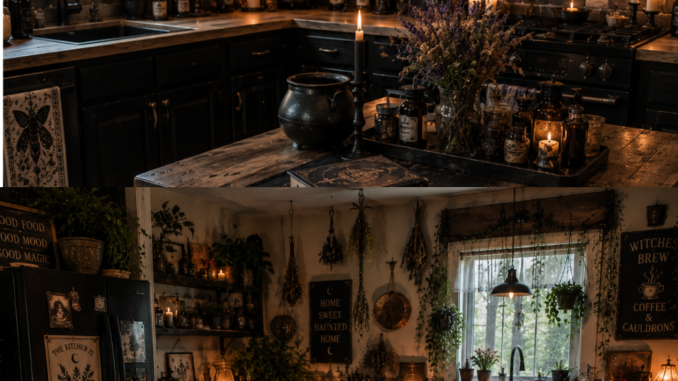
There is a special kind of magic that happens when you chop fresh rosemary into simmering soup while a candle flickers nearby and dried herbs sway gently above the stove. The kitchen witch aesthetic is not about costumes or occult props. It is a warm, earthy, intentional way of decorating and living in your kitchen that treats cooking as a small daily ritual and turns the heart of your home into a cozy sanctuary. Part cottagecore, part vintage farmhouse, part botanical apothecary, this style is taking over home decor feeds for one simple reason: it makes everyday life feel enchanted.
What Is the Kitchen Witch Aesthetic, Really?
The kitchen witch aesthetic draws its name from the old folk tradition of the kitchen witch: the person who kept the household fed, healed minor ailments with herbs, and made every meal with care and intention. Today, the aesthetic captures that spirit in visual form. Think wooden spoons and copper pots, bundles of dried lavender hanging from a beam, apothecary jars full of grains and teas, flickering candles, well-worn cookbooks, and greenery spilling from every shelf. It overlaps happily with cottagecore, dark academia, and farmhouse styles, but it has its own soul: nature indoors, handmade over mass-produced, and beauty that comes from use rather than showroom perfection.

What makes it different from plain rustic decor is intention. Every object earns its place. The mortar and pestle is not just decoration; it is used every week. The jars of dried chamomile will become tea. The aesthetic celebrates a slower, more connected way of cooking, one where you know your ingredients, touch them with your hands, and treat mealtime as something worthy of care.
The Heart of It: Intentional Cooking
Before you buy a single jar or candle, understand the philosophy underneath the look. A kitchen witch kitchen is built around intentional cooking, the idea that what you make and how you make it matters. That means choosing fresh, whole ingredients when you can, growing a few herbs on the windowsill, learning one good bread recipe by heart, and cooking in a rhythm that suits your life rather than racing the clock. The decor grows naturally out of this lifestyle. When you actually use herbs, you need somewhere to dry them. When you bake weekly, the flour jar becomes a permanent fixture.

Start small and let the aesthetic follow your habits. Cook one meal this week without rushing, paying attention to smells, colors, and textures as you go. Stir your soup slowly. Taste as you season.
Color Palettes That Set the Spell
Color is the fastest way to shift a kitchen toward the witchy-cottage mood. The classic palette is earthy and muted: deep forest green, warm terracotta, creamy ivory, rich walnut brown, and soft sage. These tones echo the garden and the woods, and they make natural wood, copper, and ceramic look instantly at home. If your kitchen walls are white or rental-beige, do not worry; you can build the whole palette through accessories, textiles, and plants without touching a paintbrush.

For a moodier take, lean into the dark cottagecore side: charcoal or deep green cabinetry, black hardware, amber glass, and candlelight tones. This version feels like a cozy apothecary at dusk and photographs beautifully. A good rule is the 60-30-10 split: sixty percent warm neutrals, thirty percent your main earthy color, and ten percent deeper accent tones like oxblood, mustard, or antique gold.
Materials and Textures to Lean Into
The kitchen witch aesthetic is a texture lover’s dream. The guiding principle is natural materials with visible age and character. Wood is king: butcher-block counters, open wooden shelves, worn cutting boards, and vintage crates. Pair it with copper and brass, which develop a living patina that fits the aesthetic perfectly, and with stoneware, ironstone, and handmade ceramics in imperfect, organic shapes. Linen, cotton, and wool bring softness through curtains, aprons, and dish towels.

What to avoid is anything that looks too slick or synthetic: glossy plastic organizers, chrome everything, and matching sets that look like they came from a single box. You do not need to throw anything away, though. A plastic utensil holder can be swapped for a thrifted ceramic crock for a few dollars, and mismatched items are actually a plus here. The texture story should say handmade, well-used, and loved.
Herbs: The Green Soul of the Kitchen
Nothing says kitchen witch like herbs, and they are the single most transformative element you can add. A bundle of dried rosemary or lavender hanging from a hook changes a room’s feeling instantly, and living herbs connect you to your food in a daily, tangible way. Start with the classics: rosemary, thyme, sage, oregano, basil, mint, and bay. Most thrive on a sunny windowsill, and a small pot of each costs less than a single takeout meal.

Dried herbs double as decor. Hang small bundles upside down in a cool, dark spot for two to three weeks, then display them from a wall-mounted rail, a branch, or the underside of a shelf. Lavender, eucalyptus, wheat stalks, and dried flowers all look stunning and last for months. Once dried, crumble the leaves into your labeled jars and you have closed the loop from garden to shelf to table. If you have outdoor space, even a tiny one, grow chamomile, calendula, or lemon balm for teas.
Apothecary Jars and Glass Storage
Glass jars are the signature storage of this aesthetic, and for good reason. They turn dry goods into decoration: golden lentils, pearl barley, dried beans, colorful teas, and whole spices become a visual pantry that is both beautiful and practical. Look for jars with cork lids, wire-bail clasps, or vintage-style glass knobs. Fill them generously, because a half-empty jar loses the magic, and group them in odd numbers for a natural, collected look.

Add handwritten or kraft-paper labels for the full apothecary effect. You can buy a simple label maker, use brown paper tags tied with twine, or write directly on the glass with a chalk marker. Start with the ten dry goods you use most and expand from there. Thrift stores and flea markets are full of beautiful old jars for a fraction of retail prices.
Candles, Light, and Moody Ambience
Lighting makes or breaks the atmosphere. Harsh overhead fluorescents will kill the vibe faster than anything, so the goal is layered, warm light. Candles are the obvious star: pillar candles in brass holders, taper candles in vintage candlesticks, and tea lights in amber glass jars scattered along shelves. Real flames add movement and warmth that no bulb can copy, and they turn an ordinary Tuesday dinner into something that feels ceremonial. Always keep them away from hanging herbs and curtains, of course.

For everyday light, swap cool white bulbs for warm 2700K ones, and add small lamps or string lights where you can. A plug-in wall sconce over the sink, fairy lights along an open shelf, or a salt lamp in the corner all add that golden, dusk-in-a-cottage glow. The trick is to light the room in pools rather than flooding it: a bright prep zone at the counter, softer glows everywhere else.
Vintage Finds and Thrifted Treasures
The kitchen witch kitchen is practically built from thrift stores. Vintage pieces bring the patina, history, and one-of-a-kind character that new items simply cannot fake. Hunt for copper pots and molds, ironstone pitchers, brass candlesticks, wooden rolling pins, enamelware, old cookbooks with stained pages, and quirky teacups that do not match. Each piece carries a story, and a shelf of mismatched treasures looks far more magical than a matching set ever could.

Thrift with a list but stay open to surprises. Good hunting grounds include charity shops, estate sales, flea markets, antique malls, and the kitchen aisle of any secondhand store. Wash everything well, and do not be afraid to mix eras. A 1970s enamel pot next to a Victorian-style brass scale next to your grandmother’s mixing bowl is exactly the layered, collected look you want.
Open Shelving That Tells a Story
If you can add or expose open shelving, do it. Open shelves are the gallery walls of the kitchen witch kitchen: the place where your jars, ceramics, plants, and treasures live in full view. A single floating wooden shelf above the counter can hold your daily tea setup, a trailing pothos plant, and three beautiful jars, and suddenly the whole room feels styled. The key is curation, not clutter. Group items in small vignettes with breathing room between them.

Style shelves with the rule of variety: mix heights, materials, and shapes. A tall stack of bowls, a short candle cluster, a trailing plant, and a framed botanical print create rhythm. Keep everyday items within reach and purely decorative pieces higher up. If full open shelving feels like too much upkeep, try one shelf, a wall-mounted rail with hooks, or a plate rack instead.
Botanical Wall Art and Hanging Greenery
Walls are prime real estate in this aesthetic, and botanical imagery is its native language. Vintage-style herb prints, framed pressed flowers, mushroom illustrations, and moon-phase art all fit beautifully. You can print public-domain botanical illustrations at home for almost nothing and frame them in thrifted frames for a gallery wall that looks expensive. A large statement piece, like an oversized dried-flower wreath or a macrame plant hanger, can anchor a whole wall.

Living greenery matters just as much as art. Pothos, spider plants, and herbs are forgiving choices that tolerate kitchen humidity and variable light. Hang them from the ceiling in macrame holders, let them trail from high shelves, or line the windowsill with small pots. Dried arrangements last even longer: pampas grass, dried lunaria, and wheat in a tall stoneware vase bring height and texture to an empty corner with zero maintenance.
The Witchy Kitchen Textile Touch
Textiles soften all that wood, glass, and metal, and they are one of the cheapest ways to shift the mood. Look for linen and cotton in natural tones or subtle patterns: striped grain-sack towels, a block-printed table runner, a vintage-style apron with pockets, and simple linen curtains that let light filter through. Dark, moody kitchens benefit from warm creams and rusts, while bright kitchens can handle deeper greens and charcoals.

Do not overlook the small pieces. A beautiful oven mitt, a set of cloth napkins instead of paper, and a woven rug runner in front of the sink all add layers. Textiles also carry scent and memory: the apron you always wear for bread day becomes part of the ritual. Seasonal swaps are easy and fun: heavier, darker textiles for autumn and winter, lighter linens for spring and summer.
Small-Space Kitchen Witch Magic
You do not need a farmhouse kitchen to live this aesthetic. Some of the most enchanting kitchen witch spaces are tiny apartments, because coziness is the whole point. In a small kitchen, go vertical: wall-mounted rails for utensils and hanging herbs, a magnetic knife strip, floating shelves above the counter, and hooks on the inside of cabinet doors. A single well-styled shelf can deliver more atmosphere than an entire room of clutter.

Choose multi-duty pieces: a beautiful Dutch oven that lives on the stove as decor, jars that are both storage and display, a cutting board that doubles as a serving platter. A tiny kitchen forces you to keep only what you love and use, which is the kitchen witch philosophy in its purest form. Small is not a limitation here; it is an advantage.
Budget Ideas: Big Vibes, Small Wallet
This aesthetic is one of the most budget-friendly styles out there, because its soul is thrifted, handmade, and grown rather than bought new. Start with a zero-dollar refresh: declutter ruthlessly, rearrange what you own into prettier groupings, and move a plant from another room into the kitchen. Then spend strategically. Your best small investments are a set of glass jars, warm light bulbs, a bundle of dried lavender, and a few kraft labels. Together they can transform a kitchen for under thirty dollars.

DIY is your superpower. Make your own dried herb bundles from grocery-store herbs, press flowers between book pages for free wall art, paint mismatched frames a single color for cohesion, and sew simple linen curtains from a tablecloth. Shop secondhand first for everything else, and check the “free” section of local marketplaces.
Seasonal Touches Through the Year
A kitchen witch kitchen breathes with the seasons, and rotating small touches keeps it feeling alive all year. In spring, bring in fresh flowers, seed packets, and light linens. Summer calls for bowls of fresh fruit, iced herbal teas in glass pitchers, and herbs drying in bunches. Autumn is the aesthetic’s high season: pumpkins and gourds, cinnamon sticks, dried orange slices, plaid textiles, and the smell of baking spice. Winter brings evergreen sprigs, dried citrus garlands, lots of candles, and simmering pots of spiced cider on the stove.

You do not need to redecorate four times a year. Keep a small box of seasonal accents and swap just a few elements: the wreath on the wall, the runner on the table, the bundle hanging by the stove. Nature gives you most of it for free if you pay attention: a branch of blossoms in spring, seed heads in autumn.
Setting Up Your Herbal Pantry
The herbal pantry is where the kitchen witch aesthetic meets real daily use. Beyond your cooking spices, dedicate space to the herbs and botanicals you use for teas, infusions, and simple home remedies: chamomile, peppermint, lemon balm, lavender, rosehips, elderflower, ginger, and nettle are a wonderful starter set. Store them in airtight glass jars away from light and heat, labeled with the name and the date you bought or harvested them.

A small wooden box or dedicated shelf keeps everything together: your jars, a tea strainer, honey, and a favorite mug. Learn two or three blends by heart, like a calming evening mix of chamomile, lemon balm, and lavender, or a bright morning blend of peppermint and ginger. This is practical, not mystical: you are simply keeping the ingredients for comfort and care within easy reach, beautifully organized.
Simple Kitchen Rituals for Daily Life
Ritual is what turns a pretty kitchen into a kitchen witch kitchen. These are not complicated ceremonies; they are small moments of intention woven into ordinary cooking. Light a candle before you start dinner and blow it out when you sit down to eat. Stir your soup clockwise while thinking of something you are grateful for. Take three slow breaths before you begin chopping, letting the day fall away. Keep a wooden spoon that is only for your favorite comfort recipe.

Morning and evening bookends work beautifully. A slow morning tea, made with attention and sipped by the window, sets the tone for the day. An evening tidy-up with a simmering pot of citrus peels and cinnamon on the stove clears both the kitchen and your mind. These tiny rituals cost nothing, take minutes, and are the reason the aesthetic resonates so deeply: it gives ordinary days a sense of meaning and rhythm.
Moon Phase and Seasonal Cooking Rhythms
Many people drawn to this aesthetic enjoy syncing their kitchen rhythms with nature’s cycles, and you can take it as lightly or as seriously as you like. A simple version: cook with what is in season, preserve the abundance of summer through canning or drying, and let winter be the season of slow braises, baking, and pantry cooking. This is how humans ate for millennia, and it naturally makes your kitchen feel connected to the turning year.

If moon phases appeal to you, use them as gentle prompts rather than rules. The new moon is a lovely time to plan the month’s meals and start a new kitchen project, like a sourdough starter. The full moon suits gathering friends for a big celebratory dinner. The point is rhythm: a kitchen that moves with the seasons feels alive in a way that a static, seasonless one never can.
Where to Source Pieces Affordably
Knowing where to look is half the battle. For vintage and secondhand, prioritize local thrift stores, charity shops, estate sales, flea markets, and antique malls. Go regularly, because stock turns over fast, and learn which days your local shops restock. Online, check local marketplace listings and auction sites for bundles of jars, copper pieces, and old cookbooks, which often sell for less in lots than individually.

For new basics, discount home stores and kitchen outlets carry affordable glass jars, wooden utensils, and linen textiles that fit the look perfectly. Garden centers and farmers markets are your herb and plant sources, often cheaper than decor shops. Do not forget the free sources: cuttings from friends’ plants, branches and pinecones from walks, and hand-me-downs from relatives clearing out kitchens. Build slowly, one treasured piece at a time.
Common Mistakes to Avoid
It is easy to get carried away, so here are the pitfalls to dodge. First, clutter without curation: the aesthetic is collected, not chaotic. If every surface is covered, edit ruthlessly and give your favorite pieces room to breathe. Second, buying props you will never use. A mortar and pestle that only gathers dust contradicts the whole philosophy; invest in beautiful versions of tools you actually reach for. Third, ignoring function. Open shelves of gorgeous jars mean little if you cannot find the salt while the pasta boils.

Other common slips: going too dark without enough warm light, which makes the kitchen gloomy rather than cozy; hanging dried herbs directly over the stove, where grease and heat ruin them; and copying a photo exactly instead of adapting it to your space and habits. Finally, do not rush. The best kitchen witch kitchens are built over months and years, one meaningful piece at a time. Let it grow organically.
Bringing It All Together: Your Kitchen, Your Sanctuary
You now have every piece of the puzzle: the philosophy of intentional cooking, earthy palettes and natural materials, herbs and apothecary jars, candlelit ambience, thrifted treasures, open shelving, botanical art, cozy textiles, small-space strategies, budget ideas, seasonal touches, a herbal pantry, daily rituals, natural rhythms, and smart sourcing. You do not need all of it at once.

The true magic of the kitchen witch aesthetic was never in the objects. It is in the shift from rushing through meals to savoring them, from a kitchen that is merely functional to one that nourishes you the moment you walk in. Cook with attention, surround yourself with natural beauty, and let the seasons in. Your kitchen will become what it was always meant to be: the warm, beating heart of your home.
Start tonight: light a candle, put on your favorite music, and cook something simple with real ingredients. Notice how different it feels. That feeling is the whole aesthetic in a single evening, and everything else, the jars, the herbs, the copper and linen, is just a way of keeping it close every day. Welcome to your kitchen witch era.
Leave a Reply