
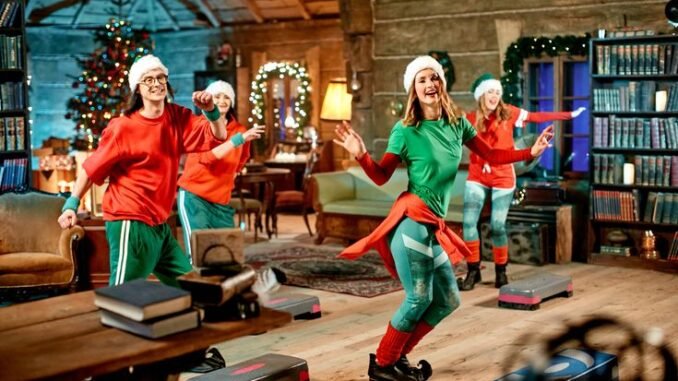
The holidays are a wonderful time, but they can easily knock your fitness routine off track. Between travel, parties, and big family meals, it is tempting to skip exercise altogether and promise to start again in January. A realistic holiday workout routine is different: it is short, flexible, and designed to fit around real life, so you stay strong and energised without missing any of the fun.
Start With a Winter Walk
A brisk winter walk is the simplest way to stay active during the holidays, and it needs no equipment at all. Walking after a big meal helps digestion, clears your head, and burns off some of the extra energy from festive food. A snowy path or a quiet neighbourhood street can feel surprisingly peaceful when the world is busy with celebrations.
Aim for twenty to thirty minutes most days, and invite family or friends along so the walk doubles as quality time. Dress in layers, wear sturdy shoes with good grip, and choose well-lit routes if you are walking after dark. Small walks add up quickly across December.
Walking is also the easiest habit to keep while travelling, since it works in any town or city.
Even a short walk counts, so never dismiss a ten-minute stroll as too small to matter.
Consistency beats perfection, especially during the festive season.

Pilates Ring Lunges
Pilates ring lunges combine balance, leg strength, and core control in one graceful movement. Holding the ring in front of your chest encourages good posture, while the lunge itself works your thighs and glutes. The slow, controlled pace makes this a good choice for a calm morning workout before the house wakes up.
Step forward into a lunge, keeping your front knee over your ankle and your torso tall. Press the ring gently as you lower, then push through your front heel to return to standing. Do eight to ten repetitions per leg, rest briefly, and repeat for two or three sets.
Focus on smooth breathing throughout, and stop if your knees feel uncomfortable at any point.
Keep the ring squeeze gentle; the goal is control, not force, throughout each repetition.
Slow repetitions build control far better than rushed, sloppy ones.

Push-Ups Anywhere
Push-ups are the ultimate holiday exercise because they need no space and no equipment. They strengthen your chest, shoulders, arms, and core all at once, and you can do a set in a bedroom, a hotel room, or even a quiet corner at a relative’s house. A few sets a day are enough to maintain upper-body strength.
If full push-ups feel too hard, start on your knees or with your hands on a sturdy table. Keep your body in a straight line, lower your chest slowly, and press back up with control. Aim for three sets of as many good repetitions as you can manage, resting for a minute between sets.
Good form matters more than high numbers, so never sacrifice technique just to finish a set.
Two minutes of push-ups before your shower can become a habit that lasts all year.
Keep a mat by your bed as a visible daily reminder.

Gym Sessions Between Parties
If you have a gym membership, the holidays are a good time to use it in short bursts rather than long sessions. A focused thirty-minute workout between parties keeps your energy up and helps you sleep better, even during the busiest weeks. You do not need to train hard every day; consistency matters far more than intensity.
Plan a simple full-body session with a few compound movements, such as squats, rows, and presses, plus a short burst of cardio. Arrive with a plan so you do not waste time deciding what to do. Bring a water bottle, and keep your rest periods short to finish on time.
Even two gym visits a week will keep your strength and fitness ticking over nicely.
Short gym visits are easier to keep than long ones, especially during the busiest weeks.
Two sessions a week are enough to maintain real progress.

Rest Days Done Right
Rest days are part of a good holiday routine, not a sign of laziness. Your muscles recover and grow stronger during rest, and a planned day off helps you enjoy parties without guilt. The trick is to rest on purpose rather than letting a whole week drift by without any movement at all.
On a rest day, try gentle stretching, a slow walk, or a few minutes of deep breathing instead of intense exercise. Sleep well, drink water, and eat a balanced meal alongside the festive treats. You will return to your next workout feeling fresher and more motivated than if you had pushed through tiredness.
Schedule rest days in advance so they feel like a choice, not a missed workout.
A rest day spent sleeping well is often more valuable than a tired, half-hearted workout.
Rest well, and your next workout will feel noticeably easier.

Music-Powered Workouts
A good playlist can transform a holiday workout from a chore into something you actually look forward to. Upbeat music lifts your mood, helps you keep pace, and makes a short session feel like it passes in no time. Many people find they push a little harder when their favourite songs are playing.
Build a festive playlist with a mix of energetic songs and a few Christmas favourites, and save it for workouts only so it stays motivating. Use headphones if you are training at home while others are relaxing, and keep the volume at a level where you can still hear your surroundings. Music is a simple tool with a big effect.
Try timing your intervals to the music, working hard during choruses and recovering during verses.
Update your playlist each week so the music stays fresh and motivating through December.
Music makes even the hardest session feel shorter and lighter.

Getting Ready: The Five-Minute Warm-Up
Never skip your warm-up, even when time is short. Five minutes of gentle movement prepares your muscles, raises your heart rate gradually, and reduces the risk of strains, which is especially important in cold weather. A good warm-up also helps you switch mentally from holiday mode into workout mode.
Start with marching on the spot, arm circles, and gentle leg swings, then add a few bodyweight squats and a slow walk around the room. You should feel warm and slightly out of breath, but not tired, by the end. From there, you can move straight into your main workout with confidence.
Think of the warm-up as part of the workout itself, not as optional extra time.
A proper warm-up also protects cold muscles, which are more vulnerable to strains in winter.
Warm muscles perform better and recover faster after training.

Barbell Squats for Strength
Barbell squats are one of the most effective strength exercises you can do, working your legs, glutes, and core together. During the holidays, when meals are richer than usual, keeping your leg strength up helps you stay active and confident on walks, stairs, and dance floors. Good technique is essential, so start light if you are new to the barbell.
Stand with your feet shoulder-width apart, brace your core, and lower your hips as if sitting into a chair. Keep your chest up and your knees tracking over your toes, then drive through your heels to stand. Do three sets of eight to ten repetitions, resting for ninety seconds between sets.
If a barbell is unavailable, a goblet squat with a single dumbbell works just as well.
Film one set occasionally to check your squat depth and knee position honestly.
Depth matters more than weight when learning to squat safely.

Dumbbell Shoulder Work
Strong shoulders help with everyday holiday tasks, from carrying shopping bags to lifting suitcases into overhead racks. Dumbbell lateral raises are a simple, effective way to build shoulder strength without needing heavy weights. The key is slow, controlled movement rather than swinging the weights up with momentum.
Stand tall with a light dumbbell in each hand, arms by your sides. Raise both arms out to shoulder height, pause briefly, then lower slowly. Keep a slight bend in your elbows and avoid shrugging your shoulders towards your ears. Do three sets of twelve repetitions, choosing a weight that feels challenging by the final few reps.
Pair shoulder work with upper-back exercises to keep your posture balanced and healthy.
Strong shoulders also improve your posture in photographs, which is a welcome bonus.
Controlled lowering builds strength just as much as lifting.

Hotel and Guest-Room Workouts
Travelling for the holidays does not have to mean abandoning your routine. A guest-room workout uses only your bodyweight and a small patch of floor, so you can train before breakfast without disturbing anyone. Even fifteen minutes will leave you feeling awake, positive, and ready for the day ahead.
Try a simple circuit: squats, push-ups, lunges, glute bridges, and a plank, performed one after another with short rests. Repeat the circuit three times, and finish with gentle stretching. Pack a resistance band if you have space in your bag, since it adds variety without adding weight.
Exercising early also frees up the rest of the day for family, food, and celebrations.
Pack your workout clothes the night before so a morning session needs no decisions.
Morning workouts leave the whole day free for celebrations.

Mindful Movement and Breathing
The holidays can be stressful, and mindful movement is a gentle way to calm your nervous system while staying active. Slow, deliberate exercise combined with deep breathing lowers tension, improves focus, and helps you sleep better during a hectic season. It is a useful complement to more intense workouts.
Try five minutes of slow stretching with long, steady breaths: inhale as you lengthen, exhale as you fold or twist. Move without rushing, and notice how your body feels rather than chasing a perfect shape. Even a short mindful session can change the tone of a busy day.
Use this practice on mornings when you feel overwhelmed, before a big family gathering.
Three slow breaths before you begin can turn a rushed session into a calming ritual.
Calm breathing turns exercise into a genuinely restorative break.

Back and Posture Work
Hours of sitting at festive tables, long car journeys, and late nights can all leave your back feeling stiff. Back and posture exercises counteract this by strengthening the muscles that hold you upright and opening up the chest. A few minutes a day makes a noticeable difference to how you feel by New Year.
Pull-up bar hangs, rows, and reverse flyes are all excellent choices, but even simple wall slides and shoulder blade squeezes help. Stand tall, draw your shoulder blades gently together, hold for five seconds, and release. Repeat ten times, a few times a day, especially after long periods of sitting.
Good posture also makes you look and feel more confident in party outfits and photographs.
Posture exercises are easy to do while waiting for a kettle to boil or a lift to arrive.
Small daily posture habits prevent most holiday back stiffness.

High-Intensity Bursts
When your diary is packed, high-intensity interval training is the most time-efficient way to stay fit. Short bursts of hard effort followed by brief rests raise your heart rate, burn energy, and keep your metabolism active, all in twenty minutes or less. It is ideal for the days between big celebrations.
Try thirty seconds of jumping jacks, mountain climbers, or squat jumps, followed by thirty seconds of rest, repeated for ten rounds. Always warm up first, and choose lower-impact options such as fast marching if jumping bothers your knees. Finish with a cool-down walk and some gentle stretching.
Two short interval sessions a week are plenty alongside walking and lighter workouts.
Interval training also boosts your mood, which helps during stressful family gatherings.
Short bursts fit easily between cooking, shopping, and visiting.

Lower-Body Strength
Lower-body strength is the foundation of everyday movement, from climbing stairs to dancing at a New Year’s Eve party. Squats, lunges, and deadlifts build the legs and glutes that power all of these activities, and they also support healthy knees and hips. A strong lower body makes the whole holiday season feel easier.
Train your lower body twice a week with a mix of bilateral and single-leg movements. For example, pair squats with reverse lunges, and add a hip hinge movement such as a Romanian deadlift. Keep the weights moderate, focus on control, and allow a day of rest between sessions.
Strong legs also improve balance, which matters on icy pavements and snowy paths.
Single-leg work reveals imbalances, so include it even if it feels harder than squats.
Strong legs make every winter walk more enjoyable and comfortable.

Core Confidence
A strong core supports your posture, protects your back, and makes every other exercise feel easier. During the holidays, when you are lifting, carrying, and sitting for long periods, core strength is especially valuable. The good news is that core training needs no equipment and only a few minutes a day.
Planks, dead bugs, and bird dogs are excellent choices because they train stability rather than just crunching. Hold a plank for thirty seconds with a straight body line, rest, and repeat three times. Keep your breathing steady, and stop if your lower back starts to sag.
Build up gradually over the month, adding five seconds to your plank each week.
A strong core makes carrying shopping, luggage, and excited children noticeably easier.
Core training supports every other movement you do daily.

Strength Training With Plates
Weight plates are a versatile tool for holiday strength training, especially when dumbbells are in use. Plate carries, presses, and squats build grip strength and total-body stability, and they add variety to a routine that might otherwise feel repetitive. Start with a light plate and focus on control.
Hold a plate close to your chest for squats, or press it overhead for shoulder work, keeping your core braced throughout. Carry a plate at your side for farmer’s walks around the gym, which build grip and posture at the same time. Two or three plate exercises per session are plenty.
Always check that plates are secure and that your path is clear before you start moving.
Plate exercises also challenge your grip, which benefits everyday tasks like opening jars.
Variety keeps holiday training interesting instead of repetitive.

The Holiday Squat Challenge
A squat challenge is a fun way to stay accountable through December, especially if you invite friends or family to join in. The idea is simple: do a set number of squats each day, building gradually from an easy starting point to a satisfying total by Christmas Eve. It takes only a few minutes and needs no equipment.
Begin with twenty squats on day one and add five each day, taking a rest day every fourth day. Track your progress on a calendar or in a group chat, and celebrate milestones together. Keep your form honest: thighs parallel to the floor, chest up, and knees tracking over your toes.
Challenges work best when they are social, so recruit a workout buddy for extra motivation.
Celebrate halfway milestones in a challenge, since small wins keep motivation high.
Challenges are more fun when friends join in together.

Light Weights, High Reps
Light weights with higher repetitions are perfect for holiday training because they are joint-friendly, easy to do at home, and still build muscular endurance. This style suits beginners, people returning after a break, and anyone who wants a gentler session between heavier workouts. You will still feel the burn by the final reps.
Choose weights that let you complete fifteen to twenty repetitions with good form, and rest for thirty to forty-five seconds between sets. Try bicep curls, shoulder presses, and tricep extensions in a simple circuit, repeating it three times. The pace should feel challenging but sustainable.
Smiling through the last few reps is allowed, and even encouraged, during the holidays.
Light weights are also ideal for exercising with a friend who is just starting out.
Gentle sessions still count, so never dismiss lighter workouts.

Mat Core Finisher
Finish any holiday workout with a short mat core session to strengthen your midsection and cool down gradually. Mat work is quiet, needs little space, and lets you focus on control rather than speed. It is a satisfying way to end a session before you stretch and relax.
Lie on your mat and try a sequence of dead bugs, glute bridges, and side planks, spending forty seconds on each with twenty seconds of rest. Keep your lower back pressed gently into the mat during floor work, and breathe steadily throughout. Repeat the sequence twice for a complete finisher.
A calm core finisher also helps your heart rate return to normal before you head to celebrations.
Mat work is quiet enough for early mornings when the rest of the house is asleep.
Quiet mat work suits early mornings and small spaces perfectly.

Crunches and Cool-Down
Crunches remain a useful core exercise when performed with good form, and they pair naturally with a proper cool-down. After a holiday workout, cooling down helps your muscles relax, reduces next-day soreness, and gives you a few quiet minutes before the festivities resume. Never rush this part of your session.
Lie on your back with your knees bent, hands lightly behind your head, and lift your shoulders using your abdominal muscles rather than pulling on your neck. Do two sets of fifteen slow repetitions, then stretch your whole body: arms overhead, a gentle spinal twist, and a seated forward fold.
End by drinking water and noting how good you feel, which makes the next workout easier to start.
Finish every session by writing down one thing that felt good about the workout.
A good cool-down leaves you refreshed, not exhausted, afterwards.

Leave a Reply