
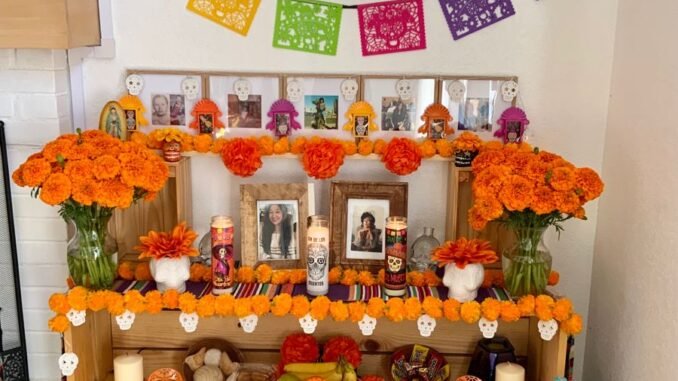
Día de los Muertos, the Day of the Dead, is one of Mexico’s most beloved traditions: a joyful, colorful celebration in which families welcome the spirits of their loved ones home for a brief visit. At the heart of the celebration stands the ofrenda, the altar, a carefully built offering of photographs, marigolds, candles, food, and mementos that guides the spirits back and honors their memory. Whether you are building your first altar or looking for fresh ideas to make this year’s ofrenda more meaningful, this guide covers the tradition, the essential elements, and twenty inspiring approaches to suit every home and family.
What Is a Día de los Muertos Altar?

An ofrenda is not a place of worship in the religious sense; it is a welcome table for the dead. Built in homes, schools, cemeteries, and public plazas each year around November 1 and 2, the altar is stocked with the things the departed loved in life: their favorite foods and drinks, photographs, candles to light their way, and marigolds whose scent and color are said to guide spirits home. Every item has meaning, and every family builds theirs a little differently.
The tradition blends Indigenous Mesoamerican beliefs about death with Catholic observances of All Saints’ Day and All Souls’ Day, and it is recognized by UNESCO as Intangible Cultural Heritage of Humanity. That heritage matters: the ofrenda is a living tradition, not a Halloween decoration, and building one is an act of remembrance and love. Understanding what each element means is the first step to creating an altar that honors both your loved ones and the culture the tradition comes from.
The Meaning Behind Every Altar Element

Every classic ofrenda element carries symbolism. The arch of marigolds represents the gateway between the world of the living and the world of the dead. Candles, one for each remembered soul, light the path so spirits can find their way. Photographs identify who is being welcomed. Water quenches the thirst of a long journey, salt purifies, and bread, especially pan de muerto, nourishes. Papel picado, the perforated tissue paper, represents the fragility of life.
Foods and drinks are chosen personally: the favorite dishes, sweets, and beverages of the departed, so they can enjoy the flavors they loved. Personal belongings, a hat, a guitar, a well-worn book, make the spirit feel recognized and at home. Sugar skulls add sweetness and a playful acknowledgment of death’s universality. Knowing these meanings transforms altar-building from decoration into storytelling, and it gives every placement a purpose.
Choosing the Right Spot for Your Ofrenda

Traditionally the ofrenda occupies a place of honor in the home: the living room, the dining room, or a dedicated corner where the family gathers. Choose a spot with enough wall space behind it for the arch or backdrop, enough floor space in front for candles and marigold paths, and enough stability that nothing will be knocked over by pets, children, or passing foot traffic. A corner of the living room often works beautifully.
Practical considerations matter as much as symbolism. Keep lit candles away from curtains, paper decorations, and anything flammable, and never leave them burning unattended; flameless LED candles are a safe alternative that still glow warmly. If you are using real marigolds, remember they shed petals, so place the altar where sweeping is easy. The best spot is one where the family will actually see and visit the altar throughout the celebration, not tucked away in an unused room.
Traditional Two-Tier and Three-Tier Altar Layouts

Many traditional ofrendas are built in levels, and each level has meaning. In the classic arrangement, the top tier represents the heavens and holds photographs of the departed and religious images; the middle tier represents the earth and holds food, drink, and personal belongings; the bottom tier represents the underworld, Mictl?n, and may hold candles, marigolds, or a cross of salt or petals. Seven levels are the most traditional, symbolizing the steps to the afterlife, but two or three tiers are far more common in modern homes.
You can create tiers with sturdy boxes, crates, or stacked tables draped in cloth, making sure each level is stable before you decorate. Keep the heaviest items, framed photos and pitchers of water, on the lowest level, and reserve the top for the lightest, most precious things. Even a simple two-level arrangement, a table with a raised back shelf, captures the layered symbolism beautifully without requiring a major construction project.
The Arch: Gateway Between Worlds

The arch is the signature silhouette of the ofrenda, a curved gateway of marigolds, palm fronds, or sugar cane that frames the altar and symbolizes the passage between life and death. Building one is simpler than it looks: bend flexible branches, wire, or even a hula hoop into an arc, anchor the ends in pots or behind the table, and wire or tie marigold garlands, real or artificial, along its length until it is lush and full.
If a full arch feels ambitious, a half-arch, a garland swag across the top of the backdrop, or even a large wreath hung on the wall behind the altar captures the same symbolism. Fresh marigolds are traditional and fragrant but wilt within days; high-quality silk marigolds look convincing and can be reused every year. Whichever you choose, make the arch the visual crown of your altar, the first thing the eye meets and the last thing the spirits pass through.
Marigolds (Cempasúchil): The Flower of the Dead

No flower is more essential to Día de los Muertos than the cempasúchil, the Aztec marigold. Its brilliant orange-gold color and strong scent are believed to guide spirits to the altar, and families scatter its petals in paths from the doorway to the ofrenda so the dead can find their way home. Buy them in bulk: you will need far more than you think for garlands, arches, table coverings, and petal paths.
Fresh marigolds are traditional, affordable, and fragrant, but they fade within a few days, so buy them as close to your celebration as possible and mist them lightly to extend their life. Artificial marigolds have improved enormously and are worth the investment if you build an altar every year; mix a few fresh stems among silk blooms for scent. Deep orange is classic, but yellow, red, and even white marigolds all appear on ofrendas, and blending shades adds depth to petal carpets and garlands.
Candles and Copal: Light and Scent

Candles are both practical and spiritual on the ofrenda: one flame for each remembered soul, lighting their path home through the dark. Traditional altars use tall white or purple votives in glass holders, often arranged in rows or in the shape of a cross on the floor before the altar. Their warm glow against the marigolds is one of the most beautiful sights of the celebration, especially in the evening.
Copal incense is the traditional scent of the ofrenda, its resinous smoke believed to purify the space and lift prayers upward. Burn it in a small clay incensario if you can find one, or substitute copal-scented candles for a simpler approach. Safety is essential: place candles on stable, heatproof surfaces away from paper decorations, keep them out of reach of children and pets, and consider high-quality flameless candles for overnight or unattended hours. The symbolism remains even when the flame is LED.
Photographs: Honoring Your Loved Ones

Photographs are the emotional center of every ofrenda. Place framed photos of the departed on the upper tiers where they are prominent, facing outward so visitors can see the faces being honored. There is no requirement for formal portraits; the pictures that capture someone’s spirit, laughing at a party, working in the garden, holding a grandchild, are often the most moving choices.
If you are honoring someone with no photograph available, a handwritten name on a decorative card, a favorite object of theirs, or even a simple candle dedicated to them serves the same purpose. Traditionally, photos of living people are kept off the altar, so frame your selections with care. Arrange the frames at varying heights for visual interest, and wipe the glass clean: in candlelight, every detail shows, and the photographs deserve to shine.
Pan de Muerto and Favorite Foods

Food is love made visible on the ofrenda. Pan de muerto, the sweet, orange-scented bread of the dead with its distinctive bone-shaped decorations, is the signature offering, but the rest of the spread should be personal: the departed’s favorite dishes, candies, and drinks. Mole, tamales, atole, chocolate, fruit, and a favorite soda or spirit all appear on family altars, chosen because someone specific loved them.
Present food the way you would for honored guests: on your best plates, in clean glasses, arranged with care. Traditionally the food is left on the altar through the celebration and shared with family afterward, a communion with the departed. If you are building the altar days ahead, use decorative or artificial versions of perishable dishes and add the real food on the main days. Small portions are fine; it is the gesture, not the quantity, that matters.
Sugar Skulls (Calaveritas de Azúcar)

Sugar skulls are the most recognizable symbol of Día de los Muertos: brightly decorated skulls made of sugar, chocolate, or amaranth that celebrate death with humor and sweetness rather than fear. On the ofrenda they represent the sweetness of life and the playful Mexican attitude toward mortality. Small ones can be inscribed with the names of the departed or of living family members, a tradition that delights children.
Real sugar skulls are edible art, molded from a simple mixture of sugar, meringue powder, and water, then decorated with colorful icing, foil, and beads. They are surprisingly easy to make at home with a skull mold, and decorating them is a wonderful family activity. If you prefer not to make them, ceramic or papier-mâché skulls painted in the same vivid style last for years and look just as festive arranged among the marigolds and candles.
Papel Picado: Colorful Cut-Paper Banners

Papel picado, tissue paper cut into intricate designs, brings movement, color, and celebration to the ofrenda. Traditionally the banners depict skeletons, doves, flowers, and scenes of daily life, and their delicate perforations are said to represent the fragility of existence and the wind that carries spirits. Strung above the altar or across the arch, they flutter with every breeze and make the whole display feel alive.
Authentic papel picado is widely available online and in Latin markets, and it is inexpensive enough to use generously. For a personal touch, try making your own: fold tissue paper like a snowflake and cut simple skull, flower, or heart shapes with small scissors. Hang the banners where they will catch the light but stay clear of candle flames, tissue paper ignites easily, and consider laminating or choosing plastic versions for outdoor altars exposed to wind and rain.
Water, Salt, and Bread: The Essentials

Among all the abundance of the ofrenda, three humble offerings are considered essential: water, salt, and bread. Water in a clean glass quenches the thirst of spirits after their long journey back. Salt, often arranged in a small dish or in the shape of a cross, purifies and preserves. Bread, the staff of life, nourishes. Together they express the most basic hospitality: rest, refreshment, and sustenance for a weary traveler.
Present these essentials with the same care as everything else: a pretty glass for the water, a small decorative dish for the salt, fresh bread on a clean plate. Some families add a small towel and soap so spirits can wash before eating, a touching detail of welcome. These simple items remind us that the ofrenda is, at its core, an act of caregiving, tending to loved ones exactly as we did in life.
Personal Belongings and Mementos

What makes an ofrenda unmistakably yours is what is personal: the objects that belonged to the departed and instantly say who they were. A grandfather’s hat and dominoes, a mother’s sewing box, a musician’s instrument, a child’s favorite toy, these mementos transform a beautiful display into a portrait. Spirits are said to recognize their belongings and feel truly welcomed, and visitors will find themselves sharing stories each object prompts.
Choose items that are meaningful rather than valuable, and arrange them where they can be seen and appreciated. If the originals are too fragile or precious to display, photographs of the objects work beautifully. Small handwritten notes, a letter to the departed, or a list of favorite memories tucked among the items add an intimate layer. This is the part of the altar no store can sell you, and it is always the part people remember.
Altars for Children (Angelitos)

Tradition holds that the souls of children, the angelitos, return first, on November 1, and their ofrendas are built with special tenderness. Altars for little ones are often smaller, lower to the ground, and filled with the things children love: toys, candy, colorful balloons, small shoes, and sweet breads. White flowers and candles are traditional, and the overall feeling is gentle and joyful rather than somber.
Building a child’s ofrenda is a beautiful way to help young family members understand remembrance. Let children choose which toys to lend to the altar, draw pictures for the departed, or help arrange marigolds. Miniature ofrendas made from shoeboxes are a beloved school project that teaches the tradition hands-on. Keep explanations honest and warm: this is a celebration of a short life loved deeply, and every bright color on the altar says so.
Altars for Pets

More and more families now build ofrendas for the pets who shared their lives, and the tradition welcomes them warmly. A pet altar follows the same principles: a photograph, marigolds, candles, and the animal’s favorite treats and toys. A beloved dog’s leash, a cat’s favorite blanket, or a bowl of the treats they begged for all make fitting offerings.
Some families set the pet ofrenda as a small side altar next to the main one; others give their animals a full place of honor among the family. There is even a traditional date, October 27, when the souls of pets are said to return. However you arrange it, a pet altar acknowledges a simple truth: grief does not distinguish between species, and neither does love. Visitors invariably linger at these altars, smiling through tears at the familiar faces.
Modern Minimalist Ofrenda Ideas

The ofrenda tradition is centuries old, but its expression keeps evolving, and minimalist altars prove that restraint can be just as moving as abundance. A modern ofrenda might use a monochrome palette, black, white, and gold, with a single perfect marigold garland, one framed photograph, and a row of identical candles. The symbolism stays intact; only the styling changes.
Minimalism suits contemporary interiors and small budgets alike. Focus on impeccable execution: a crisp white cloth, candles of uniform height, one striking floral arrangement instead of many small ones. Choose two or three elements and do them beautifully rather than crowding every traditional item onto the table. The result feels reverent and gallery-like, and it photographs stunningly, which helps share the tradition with friends who have never seen an ofrenda.
Small-Space and Apartment Altar Ideas

You do not need a large home to build a meaningful ofrenda. A small altar on a side table, a bookshelf, a dresser top, or even a wide windowsill can hold every essential element in miniature: one photograph, a small vase of marigolds, a couple of candles, a glass of water, and a piece of pan de muerto. What matters is intention, not square footage.
Think vertically in tight spaces: use a small shelf riser or stacked boxes to create two levels, and hang papel picado or a marigold garland on the wall above rather than spreading across surfaces. Flameless candles are ideal for apartments where open flames are restricted. A compact ofrenda tucked into a cozy corner often becomes the most-visited spot in the home during the celebration, proof that devotion scales to any size.
Community and School Altar Projects

Some of the most powerful ofrendas are built together. Schools, libraries, workplaces, and neighborhoods often create community altars where everyone contributes a photograph, a flower, or a favorite food of someone they miss. These collective ofrendas become gathering places for storytelling, and they introduce the tradition to people who might never build one at home.
Organizing a group altar takes coordination: assign teams for structure, flowers, food, and photographs, and set a clear theme, such as honoring local elders, beloved teachers, or victims of a shared tragedy. Provide blank cards so visitors can add names and memories throughout the celebration. Community ofrendas remind us that Día de los Muertos is fundamentally collective, a whole culture remembering together, and participating in one is an unforgettable experience.
Keeping Tradition Respectful

As Día de los Muertos gains global popularity, it deserves to be celebrated with respect for its origins. If you did not grow up with the tradition, approach it as a guest: learn what the elements mean, build your ofrenda to genuinely honor someone you loved, and avoid treating sacred symbols as mere Halloween decoration. The difference between appreciation and appropriation is sincerity and understanding.
A few guidelines help: do not use ofrenda imagery purely as spooky party decor, keep the focus on remembrance rather than aesthetics alone, and credit the Mexican culture the tradition comes from when you share photos. Better yet, learn from Mexican voices: read about the celebration’s history, support Mexican artisans when buying decorations, and if you are invited to a family’s observance, accept with gratitude. Celebrated thoughtfully, the ofrenda welcomes everyone who comes with love.
After the Celebration: Taking Down the Altar

When the celebration ends, traditionally around November 3, the ofrenda is taken down with the same care it was built. Food offerings are shared with family or respectfully disposed of, marigolds are composted, and photographs and precious mementos are returned to their places of honor in the home. Many families find this closing ritual bittersweet but comforting, a gentle farewell until next year.
Use the takedown as a moment of reflection: share a final story about each person honored, thank them for the visit, and note what you want to do differently next year. Store reusable decorations, artificial marigolds, candle holders, papel picado, labeled and organized so next year’s build is easier. Then keep the spirit of the ofrenda alive in small ways: a framed photo that stays up year-round, a favorite recipe cooked on birthdays. Remembrance, after all, is not confined to two days.
Leave a Reply