
Christmas Markets in Europe
Christmas markets in Europe are one of the great joys of winter travel. From late November until Christmas Eve, historic squares fill with wooden stalls, strings of lights, and the smells of gingerbread, roasted almonds, and mulled wine. Each city has its own traditions, foods, and crafts, so no two markets feel quite the same. This guide visits twenty of the best Christmas markets in Europe, from the medieval squares of Tallinn and Prague to the grand markets of Vienna and Cologne, with practical tips to help you plan a festive trip. Wrap up warm, bring an appetite, and get ready to fall in love with Christmas all over again.
Tallinn’s Medieval Old Town Market
Tallinn’s Christmas market, set in the medieval Town Hall Square, is often voted the best in Europe, and one visit explains why. Wooden stalls sell woolen mittens, handmade ornaments, and hot spiced drinks, while a huge Christmas tree stands at the center of the square. Snow on the cobblestones and the smell of gingerbread make the whole square feel like a scene from a storybook.

Visit Tallinn in late November or December, when the market is in full swing, and stay in the Old Town so you can walk to the square in the evening. Try the traditional black pudding and sauerkraut, or the sweet almond treats sold at many stalls. Tallinn is also a good value destination compared with many western European cities, which makes it ideal for a festive weekend break.
Tallinn’s market also has a small stage with concerts and performances throughout December, so check the program when you arrive. Children can visit Santa’s house in the square, and families often combine the market with ice skating on the nearby rink.
Strasbourg and the Blue Christmas Tree
Strasbourg calls itself the Capital of Christmas, and its markets live up to the name. The city hosts several markets across its historic center, with the most famous displays around the cathedral. One of the most striking sights is a tree covered in brilliant blue lights, standing beside a traditional carousel that spins late into the evening.

Strasbourg’s markets date back to the sixteenth century, making them among the oldest in Europe. Wander between the squares, tasting bredele biscuits and hot orange juice, and look for Alsatian crafts such as pottery and textiles. Book accommodation early, because Strasbourg is very popular in December, and consider a weekday visit for quieter streets.
A Snowy Market Lane at Night
There is a particular kind of magic to a Christmas market lane on a snowy night, when wooden stalls glow warmly and a tall tree sparkles at the end of the path. The snow softens every sound, the lights reflect on the ground, and the whole lane feels hushed and festive at once. This is the image most travelers carry home from a European Christmas market trip.

To enjoy a market lane at its best, visit after dark, when the lights are on and the crowds have thinned a little. Wear warm, waterproof boots, since snowy lanes can be slippery, and carry cash in small notes, because some smaller stalls do not take cards. Take your time, and stop for a hot drink halfway down the lane.
If you visit a snowy market, take care on icy steps and cobbles, and wear shoes with good grip rather than fashionable boots. A small backpack is more practical than a handbag when you are carrying hot drinks and shopping bags through crowded lanes.
Salzburg’s Ornament Stalls
Salzburg, the birthplace of Mozart, hosts a charming Christmas market in front of its cathedral, where stalls overflow with golden ornaments, candles, and traditional crafts. The baroque city center, dusted with snow, provides a beautiful backdrop, and the sound of choirs and brass bands often fills the square. It is a market that feels both elegant and welcoming.

While you are in Salzburg, visit the fortress for views over the city, and try the local Mozartkugeln chocolates, which make lovely gifts. The market is smaller than those in Vienna or Munich, which many visitors prefer, because it is easier to browse at a relaxed pace. Combine Salzburg with a trip to nearby Hallstatt for a truly magical winter weekend.
Cologne’s Christmas Pyramid
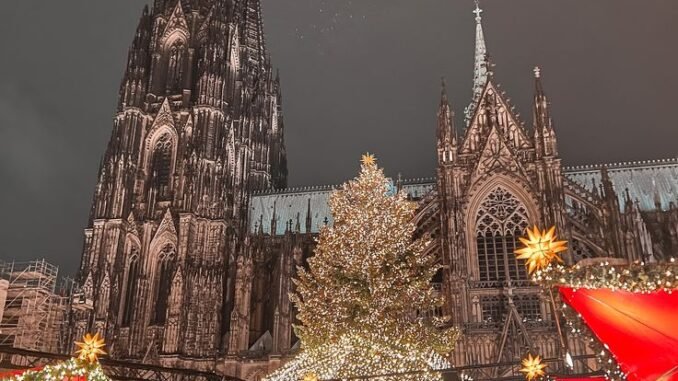
Cologne is famous for its towering Christmas pyramid, a traditional German structure with rotating tiers of figures, crowned by a great spinning fan. At night, the pyramid glows with hundreds of lights, and the market around it buzzes with visitors drinking mulled wine and eating bratwurst. The cathedral, lit up behind the market, makes the scene even more dramatic.

Cologne actually hosts several Christmas markets, each with its own character, from the harbor market to the angels’ market in the Neumarkt. Buy a souvenir mulled wine mug at your first market and reuse it at the others, since many stalls offer a discount for refills. Allow a full day to explore Cologne’s markets properly, and visit the cathedral interior as well.
Cologne’s markets each sell a different souvenir mug, and many visitors collect one from each market they visit. The mugs are inexpensive, and they make charming reminders of the trip long after the mulled wine is gone.
Market Lanes Under Strings of Lights
One of the simplest pleasures of a European Christmas market is walking down a lane strung with lights, with stalls on both sides and the smell of roasted almonds in the air. These lanes, found in cities from Vienna to Copenhagen, turn an ordinary street into a festive tunnel of light. Shoppers browse slowly, stopping to taste, to chat, and to admire handmade goods.

For the best experience, visit a market lane in the early evening, when the lights first come on and the atmosphere is at its warmest. Bring a reusable bag for purchases, and try at least one local specialty you have never tasted before. Market lanes are also wonderful for photography, especially when the lights reflect on wet cobblestones after rain.
Prague’s Old Town Square Market
Prague’s Old Town Square market is one of the most photographed in Europe, with stalls set against the twin towers of the Church of Our Lady before Týn. The square’s huge Christmas tree, decorated with thousands of lights, stands at the center, and the whole market is framed by colorful baroque buildings. In the evening, the square glows, and the atmosphere is joyful and busy.

Prague’s market is famous for its food, especially trdelník, a sweet rolled pastry, and hot mead served in small cups. Arrive early in the day if you want to shop without crowds, or come at night for the lights and live music. Prague is also very walkable, so combine the market with a walk across Charles Bridge and a visit to the castle district.
Prague in December can be very cold, with temperatures often below freezing, so plan indoor breaks in cafes and museums. The city’s beer halls and coffee houses are warm, welcoming places to rest between market visits.
Munich’s Marienplatz Market
Munich’s Christmas market on Marienplatz is one of Germany’s oldest and most traditional, dating back to the fourteenth century. Stalls sell wooden toys, ornaments, and Bavarian crafts, while the town hall’s glockenspiel chimes above the square. The smell of roasted chestnuts and gingerbread fills the air, and choirs often perform from the town hall balcony.

While in Munich, try the local bratwurst and a mug of Feuerzangenbowle, a dramatic mulled wine drink. The market is a good base for exploring Bavaria, with day trips to Neuschwanstein Castle and the Alps within easy reach. Munich can be cold in December, so dress warmly and plan regular stops in cafes to warm up.
Cologne Cathedral and Christmas Trees
Cologne Cathedral, one of the largest Gothic churches in the world, makes a breathtaking backdrop for the Christmas market at its feet. Red-roofed stalls and rows of small Christmas trees fill the square, and the cathedral’s towers rise above them into the night sky. It is a scene that captures the scale and spirit of a German Christmas market perfectly.

Visit the cathedral interior during the day to see its stained glass and the Shrine of the Three Kings, then return to the market at night for the lights. The market square can get crowded on weekends, so visit on a weekday if you prefer a calmer experience. Cologne’s central station is right beside the cathedral, making it an easy day trip from many German cities.
Vienna’s Rathausplatz Market
Vienna’s Christmas market in front of the Rathaus, the neo-Gothic town hall, is one of the grandest in Europe. Rows of wooden chalets line the square, selling crafts, food, and hot punch, while the town hall glows behind them. In the evening, the park beside the market is lit with trees and decorations, and an ice skating rink adds to the festive fun.

Vienna’s market is especially good for families, with a children’s area, a carousel, and workshops where kids can bake and craft. Adults will enjoy the punch stands, which serve many flavors, and the nearby ice rink, which winds through the park. Combine the market with a visit to Vienna’s cafes and palaces for a full festive city break.
Vienna’s ice rink at Rathausplatz, known as the Ice Dream, is one of the largest in Europe, with paths winding through the park. Skate rental is available on site, and the rink is magical in the evening when the trees are lit.
Strasbourg from Above
Seen from above at night, Strasbourg’s Christmas market is a sea of golden lights, with the cathedral tower rising above the rooftops. The main square fills with stalls and crowds, while the surrounding streets glow with decorations. It is a view that shows just how completely the city embraces the Christmas season.

For a similar view, climb the cathedral platform during the day, or find a rooftop bar in the evening. Strasbourg’s markets are spread across the city center, so pick up a market map from the tourist office and plan a walking route that takes in each square. Allow plenty of time, because every square has its own character and specialties.
Vienna’s Karlskirche Market
The Christmas market at Karlskirche in Vienna is smaller and more artistic than the big Rathaus market, with a focus on handmade crafts and local artists. Set in front of the beautiful baroque church, the market has a relaxed, creative atmosphere, and many stalls sell unique items you will not find elsewhere. It is a favorite among locals as well as visitors.

If you like crafts, this is the market to visit in Vienna, with pottery, jewelry, textiles, and woodwork made by the sellers themselves. Talk to the makers about their work, since many are happy to explain their techniques. Visit in the late afternoon, when the church is lit and the market feels most atmospheric.
Strasbourg’s Food Stalls
Food is half the joy of a Christmas market, and Strasbourg’s food stalls are among the best in Europe. You can taste Alsatian specialties like tarte flambée, gingerbread, and spiced wine, as well as pastries and roasted chestnuts. The stalls are busy and fragrant, and sampling your way around the market is a delicious way to spend an afternoon.

Come hungry and try small portions from several stalls rather than one big meal, so you can taste more. Look for stalls run by local producers, which often have the freshest and most traditional food. If you have dietary needs, ask the stallholders, who are usually happy to explain ingredients and suggest alternatives.
Handmade Ornaments and Gifts
The best Christmas market purchases are handmade: ornaments, candles, wooden toys, and textiles made by the people selling them. These gifts carry a story, and they support small makers and traditional crafts that might otherwise disappear. A hand-painted ornament from a market stall will mean more on your tree than anything bought in a department store.

When shopping for gifts, look for stalls where the maker is present and working, and ask about the materials and techniques. Buy early in your trip if you fall in love with something, since popular items sell out, and pack fragile purchases carefully in your luggage. A market gift is also a lovely way to remember the city where you found it.
When buying handmade gifts, remember that many makers accept cards, but smaller stalls may prefer cash. Bring euros in small denominations, and keep your money in a secure pocket or bag while you browse crowded markets.
Leipzig’s Festive Squares
Leipzig’s Christmas market, one of the oldest in Germany, fills the city center with garland arches, glowing stars, and more than two hundred stalls. The market has a warm, local feel, with brass bands, choirs, and a large Ferris wheel offering views over the city. It is less crowded than the biggest German markets, which makes it a pleasant discovery.

Leipzig is also a city of music, associated with Bach and Mendelssohn, and December concerts add to the festive atmosphere. Try the local Leipziger Lerche, a sweet pastry, and the mulled wine served in the market square. Combine the market with a visit to the St. Thomas Church and the city’s historic arcades.
Nuremberg’s Candle and Craft Stalls
Nuremberg’s Christkindlesmarkt is one of the most famous Christmas markets in the world, known for its red-and-white striped stalls and its traditional opening ceremony. The market is famous for its gingerbread, its small sausages, and its handmade crafts, including candles, ornaments, and wooden figures. A visit here feels like stepping into a Christmas tradition centuries old.

Nuremberg’s market is very popular, so visit on a weekday morning for a calmer experience, and try the famous Nuremberg sausages with sauerkraut. Look for the Zwetschgenmännle, little figures made from prunes, which are a traditional Nuremberg souvenir. The old town walls and castle add to the historic atmosphere of the whole visit.
Wooden Toys and Traditional Crafts
Wooden toys are a beloved tradition at German and Austrian Christmas markets, where craftsmen sell hand-carved animals, puzzles, and Christmas pyramids. These toys are durable, beautiful, and free from batteries and plastic, making them wonderful gifts for children. Watching a craftsman at work, shaping wood with simple tools, is part of the pleasure of the market.

If you buy wooden toys, choose well-made pieces with smooth finishes and no sharp edges, especially for young children. Ask the maker about the wood and the paints used, and choose classic designs that will last for years. A wooden toy from a Christmas market often becomes a family keepsake, passed down and brought out every December.
Trier’s Oldest City Market
Trier, Germany’s oldest city, hosts a lovely Christmas market in front of its cathedral, surrounded by Roman and medieval buildings. The market combines history and festivity, with stalls selling crafts and food beneath the illuminated facades of the old town. At night, the square glows, and the atmosphere is warm and relaxed.

Trier is a wonderful destination for history lovers, with Roman gates, baths, and a basilica to explore by day. The Christmas market is smaller than those in bigger cities, which makes it easy to enjoy at a leisurely pace. Try the local Riesling mulled wine, a regional specialty, and stay overnight to see the market lights after dark.
Dresden’s Striezelmarkt
Dresden’s Striezelmarkt, founded in 1434, is one of the oldest Christmas markets in Germany, and its huge Christmas tree and traditional pyramid are famous across the country. The market is named after the Striezel, the local name for stollen, the fruit bread that is Dresden’s signature Christmas treat. Stalls sell crafts, food, and the famous Dresdner Stollen in many varieties.

Visit Dresden’s market in the evening, when the tree and pyramid are lit, and try a slice of stollen with coffee. The city itself, rebuilt after the war, is beautiful in winter, with the Frauenkirche and the Zwinger palace glowing in the evening light. Allow time to explore Dresden beyond the market, since the city’s museums and architecture are world-class.
Dresden’s stollen is protected by a special seal, and only bakeries in the city may use the official name. Look for the seal when you buy, and ask the baker about the different varieties, from classic fruit stollen to marzipan and poppy seed versions.
Tallinn from Above
From above, Tallinn’s Christmas market looks like a jewel box, with rows of lit stalls arranged around the central tree in Town Hall Square. The medieval rooftops around the square, dusted with snow, frame the scene perfectly, and the whole square glows warmly against the dark winter evening. It is a view that explains why Tallinn’s market wins awards year after year.

To see Tallinn from above, climb the Town Hall tower or find a viewpoint in the Old Town. Visit the market in the evening for the lights, and in the daytime for shopping, since the stalls are just as charming in daylight. Tallinn’s compact Old Town makes it easy to combine the market with sightseeing, dining, and a relaxing spa visit.
Whether you visit one market or tour several cities, a European Christmas market trip is a wonderful way to celebrate the season. Choose your favorite cities, book early, dress warmly, and leave room in your suitcase for handmade treasures. The lights, the music, and the taste of mulled wine on a cold evening are memories you will treasure long after the decorations come down.
Leave a Reply