
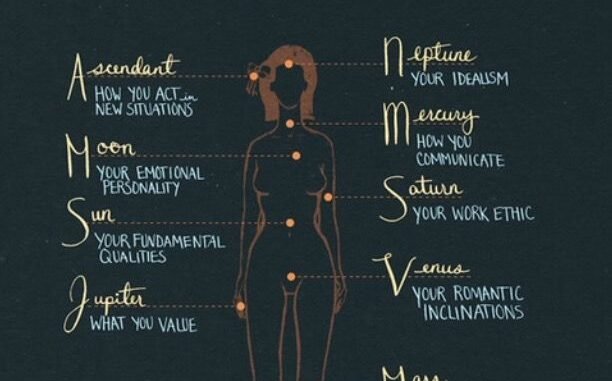
Have you ever wondered why your horoscope sometimes feels eerily accurate, or what your birth chart reveals about you? Astrology is an ancient system that maps the positions of the Sun, Moon, and planets at the moment you were born, then interprets their influence on personality and life patterns. This beginner-friendly guide explains zodiac signs, planets, houses, and aspects in plain language. By the end, you will be able to read the basics of any birth chart with confidence.
What Astrology Actually Is (and Isn’t)
Astrology studies how celestial bodies — the Sun, Moon, planets, and stars — correlate with events and personality traits on Earth. Practiced for thousands of years across Babylonian, Egyptian, Greek, and Indian cultures, it is built on the idea that the sky at your moment of birth creates a symbolic map of your character. Modern astrology does not claim the planets cause your behavior; instead, it treats their positions as a mirror reflecting patterns in your life.

It is equally important to understand what astrology is not. It is not fortune-telling with fixed predictions, and a daily horoscope in a magazine is a simplified version of a much richer system. Your full birth chart considers dozens of placements, not just your Sun sign. Skeptics and believers alike can use astrology for self-reflection, because its real value lies in the questions it prompts you to ask about yourself, not in absolute answers.
Meet the 12 Zodiac Signs
The zodiac is a belt of the sky divided into twelve equal segments, each spanning thirty degrees. Starting with Aries in spring and ending with Pisces in late winter, these signs form the foundation of Western astrology. Each sign carries its own personality archetype, from bold Aries to dreamy Pisces. Memorizing their order is your first real milestone as a student of astrology.

Every sign also belongs to one of four elements and one of three modalities, covered later in this guide. For now, think of the twelve signs as twelve distinct flavors of energy. Your Sun sign is the sign the Sun was traveling through on your birthday, which is why newspaper horoscopes ask only for your birth date. But your Sun sign is just one chapter of a much longer cosmic story.
Fire Signs: Aries, Leo, and Sagittarius
Fire signs burn bright with enthusiasm, courage, and spontaneity. Aries, the first sign of the zodiac, charges ahead like a spark catching dry grass — bold, direct, and always ready to start something new. Leo, ruled by the Sun itself, radiates warmth, creativity, and a love of the spotlight. Sagittarius aims its arrow at distant horizons, driven by adventure, philosophy, and an unshakable optimism. Together, these three signs share an instinctive, action-first approach to life.

People with strong fire placements tend to be inspiring and magnetic, though they can sometimes burn out or act before thinking. If you have ever been described as passionate, impulsive, or larger than life, fire energy is probably prominent in your chart. Fire signs pair best with air signs, which fan their flames with ideas. In relationships and friendships, they bring excitement, honesty, and a contagious zest for living fully in the present moment.
Earth Signs: Taurus, Virgo, and Capricorn
Earth signs are the grounded builders of the zodiac, valuing stability, practicality, and tangible results. Taurus, ruled by Venus, moves slowly and deliberately, savoring comfort, beauty, and loyalty. Virgo applies a sharp analytical mind to everyday details, finding fulfillment in service, order, and self-improvement. Capricorn climbs steadily toward long-term goals with discipline and patience that few signs can match. These signs turn dreams into reality through persistence.

Those with dominant earth energy are often the reliable ones — the friends who show up on time. Their challenge is learning to be flexible, since they can become stubborn or overly focused on material security. Earth signs pair naturally with water signs, whose emotional depth softens their practicality. If your chart is heavy in earth, you trust what you can see and touch, building your life one solid brick at a time.
Air Signs: Gemini, Libra, and Aquarius
Air signs live in the realm of ideas, communication, and social connection. Gemini, ruled by Mercury, is quick-witted and curious, forever collecting facts, stories, and new acquaintances. Libra, ruled by Venus, seeks harmony and beauty in relationships, weighing every side before deciding. Aquarius thinks in systems and futures, championing originality and humanitarian ideals. These signs process the world through thought and thrive on mental stimulation and lively exchange.

With strong air placements, you probably love conversation, learning, and meeting interesting people, though you may sometimes overthink or detach from your feelings. Air signs are the natural networkers of the zodiac, connecting people and ideas across distances. They blend beautifully with fire signs, whose passion gives their ideas momentum. If you recharge by talking things through rather than sitting with emotions, air is likely a dominant element in your personal cosmic makeup.
Water Signs: Cancer, Scorpio, and Pisces
Water signs navigate life through feeling, intuition, and emotional depth. Cancer, ruled by the Moon, is nurturing and protective, creating safe emotional harbors for loved ones. Scorpio dives into intensity and transformation, unafraid of life’s shadows and mysteries. Pisces, the last sign, dissolves boundaries with compassion, imagination, and spiritual sensitivity. These signs feel first and think later, trusting gut instincts that often prove remarkably accurate.

People rich in water energy are empathetic and imaginative, though they can absorb other people’s moods like a sponge and need regular solitude to recharge. Water signs find their best match in earth signs, whose steadiness gives their emotions a safe container. If you cry at movies, sense tension in a room instantly, or dream vividly, water is flowing strongly through your chart. Their gift is emotional intelligence — the ability to understand what words cannot express.
Your Sun Sign: The Core of Your Identity
Your Sun sign is the zodiac sign the Sun occupied on the day you were born, and it represents your core identity, ego, and life purpose. It is the sign most people mean when they ask, “What’s your sign?” The Sun is your essential self — your vitality, willpower, and the qualities you are here to develop. A Leo Sun, for example, expresses creativity and generous leadership, while a Virgo Sun masters discernment and service.

Because the Sun spends about a month in each sign, your Sun sign is easy to find from your birthday alone — no birth time needed. Reducing someone to just their Sun sign is like describing a novel by its title. It captures the theme but misses the plot. Still, the Sun remains the gravitational center of your chart. It gives you a sturdy anchor before you explore the Moon, rising sign, and the rest of your cosmic blueprint.
Your Moon Sign: Your Inner Emotional World
While the Sun describes who you are becoming, the Moon reveals how you feel — your instincts, habits, and emotional needs. Your Moon sign is the sign the Moon occupied at your birth, governing your inner life: what comforts you, how you handle stress, and what you need to feel secure. A Cancer Moon craves home and family closeness, while an Aquarius Moon needs freedom and intellectual friendship to feel emotionally balanced and safe.

Because the Moon changes signs roughly every two and a half days, you need your birth time and place to calculate it accurately. Many beginners are surprised to discover their Moon sign describes them better than their Sun sign, especially in private. The Moon also connects to memory, the mother figure, and your unconscious patterns. Learning your Moon sign often feels like meeting a hidden part of yourself — the you that emerges when no one else is watching.
Your Rising Sign: The Face You Show the World
Your rising sign, also called the ascendant, is the zodiac sign rising on the eastern horizon at your moment of birth. It shapes your outward personality, physical appearance, and the first impression you make on others. Think of it as the mask or the front door of your chart — the energy people meet before they know you deeply. A Capricorn rising may seem reserved and professional at first, even with a playful Leo Sun hiding underneath.

The rising sign changes about every two hours, so an accurate birth time is essential. It also sets the layout of your entire house system, making it one of the chart’s most structurally important placements. Beginners often notice that their rising sign explains why strangers perceive them differently than close friends do. Together with the Sun and Moon, it completes the trio astrologers call the Big Three.
The Big Three: Blending Sun, Moon, and Rising
Astrologers call the Sun, Moon, and rising signs the Big Three because together they sketch the essential outline of a personality. A helpful way to remember them: your Sun is who you are, your Moon is how you feel, and your rising is how you appear. Someone with a Sagittarius Sun, Pisces Moon, and Virgo rising might be an adventurous philosopher at heart, a tender dreamer inside, and a meticulous planner on the surface — a rich, layered combination.

When exploring any chart, always begin with the Big Three before diving into planets and houses. Notice how the three signs interact: harmonious elements, or interesting tension? Most free chart calculators display the Big Three prominently for exactly this reason. Mastering this trio gives you a surprisingly complete portrait, and it is the perfect foundation before you tackle the deeper layers of the birth chart.
The Planets: The Actors in Your Chart
If the zodiac signs are costumes, the planets are the actors wearing them, each representing a different psychological function or life drive. The Sun is identity, the Moon is emotion, Mercury is thought, Venus is love, Mars is action, Jupiter is expansion, Saturn is discipline, and the outer planets — Uranus, Neptune, Pluto — describe generational and transformative forces. Wherever a planet sits in your chart, by sign and house, its energy expresses itself most strongly there.

A handy memory trick: planets answer “what,” signs answer “how,” and houses answer “where.” So Venus in Scorpio in the seventh house means love (what) expressed intensely and privately (how) in the area of partnerships (where). This three-part formula is the engine of all chart interpretation. Once you learn what each planet means, you can combine it with any sign and any house to generate endless nuanced, surprisingly personal insights.
Mercury, Venus, and Mars: Your Personal Planets
Mercury, Venus, and Mars move quickly through the zodiac, so their signs are uniquely personal to you. Mercury rules communication, thinking, and learning — a Gemini Mercury chats a mile a minute, while a Taurus Mercury speaks slowly and deliberately. Venus governs love, beauty, values, and what you find attractive. Mars drives your ambition, desire, and how you handle conflict. Together, these three color your daily interactions more visibly than any other planets.

Because they orbit close to Earth, the personal planets change signs every few weeks to two months, so people born days apart can have notably different Mercury or Mars placements. In synastry, the astrology of relationships, Venus and Mars compatibility reveals how two people love and desire. Watch these three closely in any chart — they describe the you that friends, partners, and coworkers meet every day.
Jupiter to Pluto: The Slow-Moving Outer Planets
Beyond Mars lie the social and outer planets, which move slowly and shape whole generations as much as individuals. Jupiter, the planet of luck and expansion, spends a year in each sign, blessing its themes with optimism and growth. Saturn takes about two and a half years per sign, teaching discipline through challenges. Uranus, Neptune, and Pluto move so slowly that everyone your age shares their sign — they describe your generation’s collective themes rather than personal quirks.

What makes outer planets personal is their house placement and aspects to your personal planets. Saturn in your tenth house, for instance, suggests serious career lessons regardless of its sign. Famous Saturn returns — when Saturn comes back to its birth position around ages twenty-nine and fifty-eight — mark major life restructurings. Do not fear these transits; astrologers view them as cosmic checkpoints inviting maturity. The outer planets ask big questions about freedom, dreams, and transformation across your lifetime.
The 12 Houses: Where Life Happens
The birth chart is divided into twelve houses, each governing a different life area. The first house covers self and appearance, the second money and values, the third communication, the fourth home and family, the fifth creativity and romance, and the sixth work and health. The seventh rules partnerships, the eighth shared resources and transformation, the ninth travel and philosophy, the tenth career, the eleventh friendships, and the twelfth spirituality and the subconscious.

Houses are determined by your birth time and location, so twins born minutes apart can have different house placements. A planet in a house activates that life area: Mars in the tenth suggests a driven career, Venus in the fourth a love of home. Empty houses are not inactive; their ruling planet still tells their story. Learning the houses turns your chart from a list of traits into a map of where your life’s action unfolds.
The Four Elements: Fire, Earth, Air, and Water
You have met the elements through the sign groups, but they reveal your chart’s overall temperament. Count how many planets fall in each element: a chart heavy in fire burns with inspiration but may lack patience, while an earth-heavy chart is dependable yet possibly rigid. Air dominance brings brilliant ideas with occasional detachment, and water dominance offers deep feeling that sometimes floods. Most charts show a mix, with one or two elements leading.

The elements also explain compatibility at a glance. Fire and air feed each other — enthusiasm meets ideas — while earth and water nourish each other — stability meets emotion. When elements clash, like fire’s impulsiveness meeting earth’s caution, friction teaches both sides something valuable. As a beginner, scanning a chart for elemental balance is one of the fastest ways to grasp someone’s basic nature. It is astrology’s version of reading the room before you enter it.
The Three Modalities: Cardinal, Fixed, and Mutable
Alongside elements, each sign belongs to one of three modalities describing how it operates. Cardinal signs — Aries, Cancer, Libra, Capricorn — initiate and lead, launching projects and seasons. Fixed signs — Taurus, Leo, Scorpio, Aquarius — sustain and stabilize, following through with determination. Mutable signs — Gemini, Virgo, Sagittarius, Pisces — adapt and adjust, thriving on change and variety. Together, the modalities explain why two signs of the same element can behave so differently.

Consider fire: cardinal Aries starts the blaze, fixed Leo keeps it burning steadily, and mutable Sagittarius spreads its sparks in every direction. Cardinal dominance marks a self-starter who may struggle to finish; fixed dominance means loyalty with a risk of stubbornness; mutable dominance brings flexibility that can tip into restlessness. Noticing modality patterns adds a dynamic layer to your readings, showing not just what energy someone has, but how they wield it.
Aspects: How the Planets Talk to Each Other
Aspects are the geometric angles between planets in your chart, describing how their energies interact. The major aspects every beginner should know are the conjunction (planets side by side, blending energies), the sextile (sixty degrees, friendly opportunity), the square (ninety degrees, productive tension), the trine (one hundred twenty degrees, harmonious flow), and the opposition (one hundred eighty degrees, push-pull polarity). Tight aspects — those within a few degrees — speak loudest in a chart.

Think of aspects as conversations: a Venus-Mars trine suggests love and desire flow easily together, while a Mercury-Saturn square might indicate a mind that works hard to express itself clearly. Squares and oppositions are often called “hard” aspects, but they generate the friction that drives growth — a chart of only trines can lack motivation. When reading aspects, start with conjunctions involving the Sun, Moon, or ascendant ruler, since those shape personality most directly and memorably.
Reading Your Birth Chart Wheel Step by Step
Looking at a birth chart wheel for the first time can feel overwhelming, but a simple order makes it manageable. First, note your Big Three — Sun, Moon, and rising signs. Second, identify which elements and modalities dominate. Third, look at each personal planet’s sign and house, starting with Mercury, Venus, and Mars. Fourth, scan the houses for planets, noting which life areas are most activated. Finally, check the tightest aspects for the chart’s central tensions and talents.

Free online calculators will generate your wheel from your birth data in seconds. As you practice, resist memorizing every placement at once — instead, look for repeating themes. Three planets in water signs plus a Scorpio Moon tells a louder story than any single placement alone. Keep a notebook of observations; over time, you will develop an intuitive feel for how the symbols weave into a coherent portrait.
Moon Phases and Retrogrades: Timing in Astrology
Beyond the natal chart, beginners love astrology’s timing techniques. The Moon’s monthly cycle is the simplest: new moons favor beginnings and intentions, while full moons bring culmination and emotional clarity. Many people track their moods across the cycle and plan projects accordingly. Retrogrades — when a planet appears to move backward from Earth’s view — are the most famous timing concept. Mercury retrograde, happening three to four times a year, is linked to communication mix-ups and technology glitches.

Rather than fearing retrogrades, astrologers treat them as cosmic review periods — ideal for revisiting, revising, and reconnecting rather than launching. Each planet’s retrograde has its flavor: Venus retrograde revisits relationships and values, Mars retrograde reexamines drive and anger. Transits, the current positions of planets relative to your birth chart, add another timing layer. Start with the Moon cycle and Mercury retrograde; they are practical, observable, and a delightful entry into astrology’s rhythmic view of time.
Your Next Steps as a Beginning Astrologer
You now know the core vocabulary of astrology: signs, elements, modalities, planets, houses, and aspects. The best next step is to generate your own birth chart using a free online calculator and work through it section by section with this guide beside you. Then try reading the charts of willing friends and family — practice on real people accelerates learning enormously. Notice which interpretations resonate and which fall flat; honest feedback sharpens your skills faster than any textbook alone.

From here, you might explore horoscopes with fresh eyes, noticing they are written for rising signs more often than Sun signs. Consider a beginner astrology book or course when you are ready to go deeper into predictive techniques and chart synthesis. Above all, stay curious and humble — even professional astrologers study for decades. The stars offer a language for self-understanding, and you have just learned its alphabet. Keep looking up, keep questioning, and enjoy the journey.
Leave a Reply