
The holidays have a way of turning even the most disciplined budget into a distant memory. Between gifts, groceries, travel, decorations, and all the little extras nobody plans for, the average household spends well over a thousand dollars every holiday season, and much of it lands on a credit card in a last-minute rush. A holiday budget planner changes that pattern completely. It gives every dollar a job before December arrives, so you can enjoy the season instead of dreading the January credit card statement. This guide walks you through twenty practical planner sections, from setting your total spending limit and building a per-person gift budget to tracking travel costs, creating a sinking fund, and recovering financially in January. Whether you love printable planners, a simple notebook, or a spreadsheet, these twenty sections give you a complete system for a joyful, debt-free holiday season.
Start With Your Total Holiday Spending Limit
Every good holiday budget planner begins with one number: the total amount you will spend on the entire season. Before you list a single gift or browse a single sale, decide what you can genuinely afford to cash-flow without touching credit cards or emergency savings. Look at what you spent last year, then adjust for this year’s income and goals. Many families land somewhere between $800 and $2,000, but the right number is the one that lets you sleep at night. Write this figure at the very top of your planner in big, bold numbers, because every later decision refers back to it. If the total feels tight, that is useful information, not a failure. It forces the creative, intentional choices that make holidays meaningful: homemade gifts, experience-based presents, and honest conversations about scaling back. A firm ceiling is what separates a planner from a wish list.

List Every Person on Your Gift List
The fastest way to blow a holiday budget is forgetting people. That is why the second page of your planner should be a complete gift recipient list, made early in the season. Write down everyone: immediate family, extended relatives, close friends, coworkers, your kids’ teachers, coaches, neighbors, your mail carrier, and anyone else you traditionally acknowledge. Be honest about social obligations rather than aspirational. Next to each name, add a one-line gift idea or at least a category, like “books” or “homemade cookies.” Seeing the full list on one page is often a wake-up call, and that is the point. You may realize you are buying for twenty-two people when your budget only supports fifteen, which lets you make deliberate cuts now instead of panicked ones in mid-December. Group gift exchanges and experience gifts can shrink the list gracefully.

Set a Per-Person Gift Budget
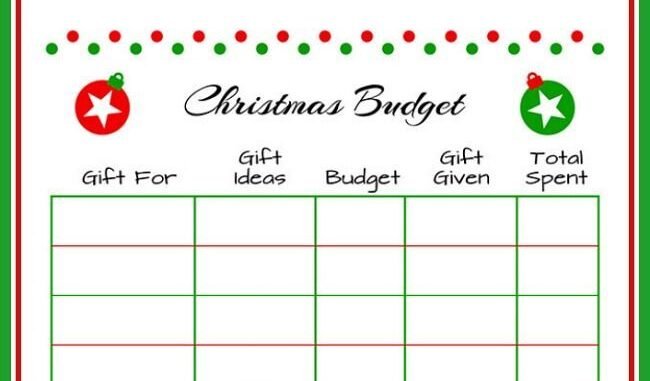
Once your list is complete, assign a specific dollar amount to each person. This is the heart of the holiday budget planner, and it is where most overspending gets prevented. Give your spouse or kids a larger share, set modest amounts for coworkers and acquaintances, and keep a small tier for teachers and service providers. The key discipline is that all the per-person amounts must add up to less than your total gift budget, leaving room for the other holiday categories. Write both the planned amount and the actual spent amount in side-by-side columns so you can see drift in real time. When you find the perfect $60 gift for someone with a $40 budget, the planner forces a conscious choice: upgrade the budget by cutting elsewhere, or keep looking. That pause is where savings happen.

Track Gifts Bought, Wrapped, and Delivered
Buying the gift is only one third of the job, and a planner page that tracks each gift’s status prevents the classic December chaos of duplicate purchases and forgotten presents. Create columns for each person: gift idea, store, price, then checkboxes for bought, wrapped, and delivered or shipped. Checking off “bought” stops you from second-guessing and buying a backup gift. The “wrapped” column, updated during a wrapping session with holiday music, turns a chore into a satisfying ritual. The “delivered” column matters most for shipped gifts, where you also note the carrier and tracking number. Review this page weekly in December. If something still shows as unbought by mid-month, you know exactly where to focus instead of wandering the mall in a panic buying things nobody needs.

Budget for Holiday Food and Hosting
Food is the stealth budget-killer of the holiday season. The big holiday dinner, cookie-baking marathons, potluck contributions, and hosting out-of-town guests can easily add hundreds of dollars that never appeared in the “gift budget.” Give food its own planner section with a dedicated dollar amount. Break it down by event: Christmas dinner groceries, baking supplies, appetizers for the party you are hosting, and contributions to gatherings at others’ homes. Plan menus early and shop from a list, because holiday grocery impulse buys are legendary. If you are hosting overnight guests, add a line for extra groceries and maybe fresh guest-room supplies. One smart tactic: assign each major meal a per-person cost target. A $12-per-person Christmas dinner for ten people is a $120 line item you can plan for, not a surprise.

Plan Your Holiday Travel Costs
If your holidays involve travel, those costs deserve their own planner page, because they rival gift spending for many families. List every expense: flights or gas, tolls, airport parking, hotels or Airbnb stays, rental cars, pet boarding, and meals on the road. Research prices as early as possible, since holiday travel booked in October is dramatically cheaper than the same trip booked in December. Set fare alerts and be flexible with dates if you can. For road trips, calculate fuel costs honestly using your car’s mileage and current gas prices, then add a cushion for the inevitable fast-food stops. If family members are splitting costs, note who owes what directly in the planner so money conversations stay clean. Travel planned on paper in autumn is travel you can actually afford in December.

Create a Sinking Fund for the Holidays
A sinking fund is simply money you save a little at a time for a known future expense, and it is the single most powerful tool in a holiday budget planner. Instead of scrambling in December, divide your total holiday budget by the number of months until the holidays and save that amount automatically each month. A $1,200 holiday budget becomes $100 a month starting in January, or $150 a month starting in May. Keep the fund in a separate savings account, ideally one slightly out of sight, so you are not tempted to raid it for everyday spending. Label it clearly and watch it grow through the year. By November, the money is simply there, and the holidays feel abundant instead of stressful. If you are starting late, even a three-month sprint of aggressive saving beats putting everything on credit.

Use the Cash Envelope System for Holiday Shopping
Credit cards make holiday overspending invisible, which is why the cash envelope system pairs so beautifully with a holiday budget planner. Withdraw your gift and holiday shopping budget in cash, then divide it into labeled envelopes: one per person or one per category, such as gifts, stocking stuffers, food, and decor. When an envelope is empty, spending in that category stops, no exceptions. The physical act of handing over cash creates a moment of friction that swiping never does, and studies consistently show people spend less with cash. If carrying large amounts of cash feels unsafe, use a dedicated prepaid debit card loaded with exactly your budget instead. The principle is identical: a hard, visible boundary. Envelopes also make it easy to see at a glance where you stand, which is the whole point of planning in the first place.

Build a Holiday Spending Log
A budget only works if you record what you actually spend, so your planner needs a running spending log. Every time holiday money leaves your hands, write it down the same day: date, what you bought, who it was for, and the amount. Keep a running total at the bottom of the page so you always know exactly how much of your budget remains. This habit takes less than a minute per purchase but delivers the most valuable feedback in your entire planner. Patterns emerge quickly. You might discover that “small” stocking stuffer runs are quietly eating $200, or that shipping costs are doubling the price of online gifts. Without the log, these leaks stay invisible until January. With it, you can course-correct in early December while there is still time to adjust, return, or simply stop.

Set Aside a Buffer for Surprise Expenses
No matter how carefully you plan, the holidays will surprise you. A forgotten cousin, a price jump on the toy your kid wants, an invitation to a last-minute party that needs a host gift, or a recipe that calls for expensive ingredients. Smart planners build in a buffer of 10 to 15 percent of the total budget specifically for these surprises. If your total is $1,500, park $150 to $200 in a “just in case” line and do not allocate it to anything in advance. Having this cushion means surprises stay minor instead of becoming budget emergencies. If December ends and the buffer is untouched, roll it into savings or next year’s sinking fund. Planners who skip the buffer almost always overshoot their total, because life refuses to follow a spreadsheet perfectly.

Compare Prices and Hunt for Deals Early
Your planner should include a deals and decision page where you track prices before you buy. Start watching prices in October for big-ticket gifts, and note the regular price alongside any sale price you find. This prevents the classic trap of a “50 percent off” deal that was marked up the week before. A few proven tactics belong on this page:
- Set price alerts on major retailers for your top five most expensive gifts.
- Check warehouse clubs and small businesses, not just big-box sale events.
- Decide your Black Friday plan in advance: a short list, a spending cap, and a firm rule against browsing “just to look.”
- Stack cashback apps and credit card rewards only on purchases already in the budget.
Record every deal you score with the amount saved. Watching your “saved” total grow is motivating, and it keeps deal-hunting strategic instead of turning into an excuse to buy extra things.

Budget for Decorations Without Overspending
Holiday decor spending creeps up through dozens of small purchases: a new wreath here, trendy ornaments there, fresh garland, outdoor lights, and table settings. Give decorations their own firm line in the planner, and start by inventorying what you already own before buying anything. Most households can decorate beautifully with existing pieces plus a few strategic additions. Set a rule that new decor must replace something old or fill a genuine gap, not just chase a trend. Thrift stores, after-Christmas clearance sales, and DIY projects stretch a decor budget remarkably far. If you love a fresh tree each year, price that in early since it is often the single biggest decor expense. A $75 decor cap forces creativity, and honestly, the most charming holiday homes are rarely the ones that spent the most.

Plan Charitable Giving Into Your Budget
Generosity is central to the season for many families, but unplanned giving can quietly wreck a budget. Instead of spontaneous donations that add up, decide your charitable giving amount deliberately and write it into the planner alongside gifts and food. This might include toy drives, food bank donations, sponsoring a family, tipping service workers extra, or year-end charitable contributions for tax purposes. Planning it makes the giving more meaningful, not less, because you choose causes that matter to you rather than reacting to every solicitation. Involve kids by letting them pick a charity within a set amount; it teaches budgeting and generosity at once. If money is tight, remember that time and handmade contributions count too. The goal is a giving plan you feel good about in January, not one you regret.

Track Wrapping, Cards, and Shipping Costs
Ask anyone who has shipped twenty packages in December: the “small stuff” is not small. Wrapping paper, gift bags, tissue, tape, ribbons, holiday cards, postage, and shipping fees can easily total $100 to $200, and almost nobody budgets for them. Your planner needs a dedicated page for these finishing costs. Buy wrapping supplies right after the holidays when they are 70 percent off, and keep a simple inventory so you do not rebuy what you own. For shipping, compare carrier rates early and note deadlines on your planner calendar, because expedited shipping in late December is brutally expensive. Consider consolidating: one beautifully wrapped box per household instead of individually wrapped items, or digital cards for distant acquaintances. These trims feel minor, but they are pure budget leakage.

Use a Weekly Holiday Savings Challenge
If you are starting your holiday fund late, a weekly savings challenge turns a daunting total into manageable sprints. Divide your remaining holiday budget by the weeks left until mid-December and commit to setting aside that amount every single week. For example, eight weeks at $125 per week builds a $1,000 fund. Write the weekly target on your planner and check off each week as you transfer the money. To make it stick, automate the transfer for payday, and cut one discretionary expense per week to fund it: a week of packed lunches, skipping takeout, or pausing a subscription. The visual progress of checked-off weeks is surprisingly motivating. Even a short four-week challenge dramatically reduces how much lands on credit cards, and starting one in November is infinitely better than starting nothing at all.

Review and Adjust Your Budget Mid-Season
A holiday budget planner is a living document, not a set-and-forget form. Schedule a formal budget review in early December, about two to three weeks into the season. Pull out your spending log, compare actual spending against every category, and be honest about where you stand. If gifts are running $150 over but food is $100 under, reallocate deliberately rather than letting the overage slide. This is also the moment to make hard calls: scaling back a party, switching to homemade gifts for a few people, or trimming the decor budget to protect the gift fund. The review takes twenty minutes and it is the difference between a plan that works and a plan that quietly fails. Write your adjustments directly in the planner so the new numbers are official, not vague intentions.

Avoid Holiday Debt With a Pay-As-You-Go Rule
The most important rule in your entire planner is also the simplest: if the money is not in the holiday fund, the purchase does not happen. Write this pay-as-you-go rule on the first page where you will see it every time you open the planner. Credit cards feel painless in December and excruciating in January when interest starts compounding on a balance you cannot immediately clear. If you use credit cards for rewards, treat them strictly as debit cards: every charge must already be covered by budgeted cash, and the balance gets paid in full. One practical safeguard is to leave the credit cards at home during holiday shopping trips and carry only your budgeted cash or debit card. The holidays are supposed to create warm memories, not a debt hangover that lasts until spring.

Plan Your Post-Holiday Budget Recovery
Your holiday budget planner should not end on December 25. Dedicate the final section to January recovery, because how you handle the aftermath determines whether the holidays were truly affordable. In the first week of January, total up every holiday category and compare it against your original plan. If any balance landed on a credit card, make a payoff plan with a specific date, and pause non-essential spending until it is cleared. Rebuild your emergency fund if you dipped into it, then restart the holiday sinking fund for next year while the lessons are fresh. Even $50 a month starting in January beats another December scramble. Also note what worked: which gifts were hits, which traditions were worth the money, and what you would skip. That reflection is the seed of next year’s planner.

Digitize Your Planner With a Spreadsheet Backup
Paper planners are charming and effective, but a digital backup makes your holiday budget planner far more powerful. Photograph or recreate your key pages in a simple spreadsheet with the same categories: total limit, per-person gift budgets, spending log, travel, food, and buffer. The spreadsheet does the math automatically, flagging when a category goes over budget, and it syncs between partners so both shoppers see the same numbers in real time. Share it with anyone who shops for the household to prevent double-buying. A shared note on your phone with the gift status list is invaluable during actual shopping trips. The best system is often hybrid: the satisfying paper planner at home for planning sessions, and the spreadsheet in your pocket for execution. Back up both before December, because losing your budget mid-season is a special kind of chaos.

Reflect and Save Your Planner for Next Year
When the season ends, resist the urge to toss the planner. File it somewhere you will find it next October, because last year’s actual numbers are the most valuable budgeting data you own. Flip through and annotate: circle the categories you underestimated, star the gifts that were biggest hits, and cross out traditions nobody missed. Write a short note to your future self with three lessons, like “start gift shopping in October” or “the $200 decor budget was twice what we needed.” Then set a calendar reminder for next fall to pull the planner out and build the new one. Each year your holiday budget planner gets smarter, your estimates get tighter, and the season gets less stressful. That compounding wisdom is the real payoff: holidays that feel generous and joyful because the money was handled long before the lights went up.

Leave a Reply