
Argentina Travel Guide 2026: 20 Must-See Places and Experiences
Argentina is a country that refuses to be boring. It stretches from steamy subtropical jungles in the north to the icy tip of Patagonia in the south, packing in thundering waterfalls, world-class wine regions, glacier-carved mountains, and one of the most electric capital cities on the planet. In 2026, Argentina remains one of the best-value long-haul destinations for American travelers, with a favorable exchange rate, excellent domestic flight connections, and a tourism infrastructure that keeps getting better.
Whether you have two weeks or two months, this guide covers the 20 places and experiences you absolutely should not miss. For each one, you’ll find what makes it special, the best time to go, and how long to stay — everything you need to build your perfect Argentina itinerary.
1. Buenos Aires: La Boca and Caminito

Few neighborhoods in South America are as instantly recognizable as La Boca. Its famous street, Caminito, is a riot of color — corrugated iron houses painted in electric blues, yellows, and reds, tango dancers performing on cobblestones, and artists selling their work from open-air stalls. This is the working-class heart of Buenos Aires, birthplace of the legendary Boca Juniors football club, and the neighborhood where tango first took root among Italian and Spanish immigrants.
Come in the morning to beat the tour buses and have Caminito mostly to yourself. Visit the colorful conventillos (tenement houses), grab a choripán from a street vendor, and consider a guided walking tour to understand the area’s rich immigrant history. Stay alert after dark, as the neighborhood is best enjoyed during daylight hours. Budget two to three hours here, ideally combined with a visit to the nearby San Telmo market on Sundays.
2. Buenos Aires: Recoleta Cemetery

Recoleta Cemetery looks like a small city of marble and stone, and in many ways it is — a city of the dead that tells the story of Argentina’s aristocratic past. This 14-acre necropolis in one of Buenos Aires’ most elegant neighborhoods holds the ornate mausoleums of presidents, generals, Nobel laureates, and Argentina’s most famous resident, Eva Perón. Her tomb, surprisingly modest compared to its neighbors, draws a steady stream of visitors.
Wander the narrow lanes between elaborate art deco and neo-Gothic crypts, many with glass doors revealing coffins stacked inside. A free guided tour (offered in English on weekends) transforms the experience from morbid curiosity into a fascinating lesson in Argentine history and politics. The surrounding Recoleta neighborhood is worth an afternoon too, with its French-style palaces, the MALBA-adjacent parks, and excellent cafés. Allow two hours for the cemetery itself.
3. Buenos Aires: San Telmo and Tango Shows

San Telmo is Buenos Aires’ oldest neighborhood and its bohemian soul. Cobblestone streets lined with colonial mansions, antique shops spilling onto sidewalks, and the famous Sunday feria (street market) on Calle Defensa make it irresistible. But San Telmo’s greatest gift to visitors is tango in its most authentic setting — not the glitzy dinner shows of Puerto Madero, but intimate milongas and historic venues where locals still dance.
Book an evening tango show at a traditional venue like El Viejo Almacén or a more local spot in San Telmo itself. Better yet, take a beginner tango lesson in the afternoon — many studios offer one-hour group classes for visitors — then watch the pros at night with newfound appreciation. On Sundays, the antique market stretches for blocks and pairs perfectly with a parrilla lunch. Dedicate a full day and evening to San Telmo.
4. Buenos Aires: Palermo Neighborhood

Palermo is Buenos Aires at its most livable — a sprawling district of leafy parks, street art, boutique hotels, and the city’s best restaurant and bar scene. Palermo Soho and Palermo Hollywood are packed with designer shops, craft cocktail bars, and parrillas that stay busy until the early hours. By day, the Bosques de Palermo (Palermo Woods) offer a green escape with rose gardens, lakes, and jogging paths.
Food lovers should plan at least two dinners here. Try a traditional parrilla for grass-fed Argentine beef, then a modern tasting menu the next night — Palermo has both in abundance. The street art walking tours are excellent, revealing massive murals that turn whole buildings into canvases. Palermo is also the best base for first-time visitors, with safe streets and easy subway access to the rest of the city. Spend two to three days exploring its sub-neighborhoods.
5. Iguazu Falls

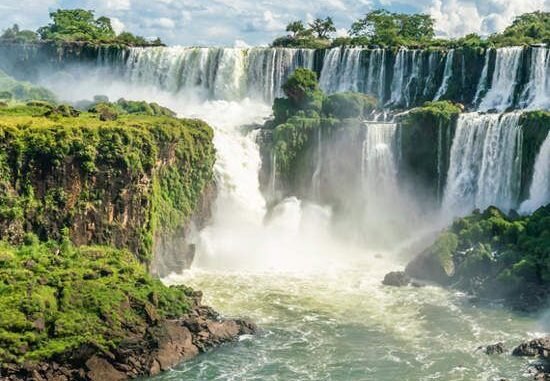
Nothing prepares you for Iguazu Falls. Taller than Niagara and wider than Victoria, this curtain of 275 individual waterfalls thundering through subtropical jungle on the Argentina-Brazil border is one of the great natural spectacles on Earth. The Argentine side offers the immersive experience — walkways that take you directly over and under the falls, including the jaw-dropping Devil’s Throat, where a U-shaped chasm swallows half a million gallons of water per second.
Plan a full day on the Argentine side (Iguazú National Park) and, if time allows, half a day on the Brazilian side for the panoramic views. The jungle train, boat rides that plunge you into the spray, and trails through forest filled with toucans and coatis round out the experience. Visit in the shoulder seasons (March-May or September-November) for smaller crowds and pleasant weather. Two full days is ideal.
6. Patagonia: El Chaltén and Mount Fitz Roy

El Chaltén is a frontier town with one purpose: getting you into the mountains. Founded in 1985 specifically to support tourism in Los Glaciares National Park, this small Patagonian outpost sits in the shadow of Mount Fitz Roy, whose jagged granite spires are among the most photographed peaks in the Andes. The town’s superpower is access — world-class trails start right from the edge of town, no car or guide required.
The Laguna de los Tres trek is the classic: a challenging full-day hike (20 km round trip) that ends at a glacial lagoon directly beneath Fitz Roy’s towering face. Shorter options like the Laguna Capri trail deliver stunning views in half the time. Weather is famously fickle — pack layers and windproof gear even in summer. Visit between November and March for the best trail conditions. Allow three to four days to account for weather windows.
7. Patagonia: Perito Moreno Glacier

The Perito Moreno Glacier is one of the few glaciers in the world that is still advancing, and watching it calve is an experience that rearranges your sense of scale. This 30-kilometer river of ice, up to 60 meters tall at its face, groans and cracks before shedding house-sized chunks into Lago Argentino with a roar you feel in your chest. A network of steel walkways and balconies lets you view the glacier from multiple angles, each more dramatic than the last.
For the full experience, book a mini-trekking excursion that includes a boat crossing and a guided walk on the glacier itself with crampons — no experience needed, just reasonable fitness. The nearby town of El Calafate makes a comfortable base with good hotels and restaurants. Visit from October to April; the glacier is spectacular year-round but access and tours are best in the warmer months. One full day is enough, though many travelers combine it with El Chaltén.
8. Patagonia: Ushuaia, the End of the World

Ushuaia proudly bills itself as the city at the end of the world, and standing on the shores of the Beagle Channel with snow-capped peaks behind you, the claim feels earned. This remote port at the southern tip of Argentina is the gateway to Antarctica cruises, but it deserves attention in its own right — for the haunting beauty of Tierra del Fuego National Park, boat trips past sea lion colonies and penguin rookeries, and the famous End of the World Train.
Take a catamaran cruise on the Beagle Channel to spot sea lions, cormorants, and the iconic Les Eclaireurs lighthouse. Hike the coastal trails of Tierra del Fuego National Park, where lenga forests meet the sea. In winter (June-August), Ushuaia offers South America’s southernmost skiing at Cerro Castor. Summer (November-March) brings nearly 18 hours of daylight. Allow three days, more if you’re boarding an Antarctica expedition.
9. Mendoza Wine Region

At the foot of the Andes, Mendoza produces some of the world’s great wines — and its Malbecs are arguably the best on the planet. This sun-drenched region, with over 1,200 wineries, pairs high-altitude vineyards with a backdrop of snow-capped peaks that makes every tasting feel cinematic. The three main wine areas — Luján de Cuyo, Maipú, and the Uco Valley — each offer a different experience, from historic bodegas to ultra-modern architectural showpieces.
Rent a bike in Maipú and pedal between wineries, or hire a driver for a full-day tour through the Uco Valley’s premium estates. Many bodegas offer asado (barbecue) lunches paired with their wines — book ahead, as the best ones fill up. March’s Vendimia harvest festival is the region’s biggest celebration. Beyond wine, Mendoza is the launch point for Aconcagua expeditions and white-water rafting. Spend two to three days minimum; wine lovers will want four.
10. Bariloche and the Lake District

San Carlos de Bariloche looks like it was airlifted from the Swiss Alps — chocolate shops, alpine architecture, and a stunning setting on the shores of Lake Nahuel Huapi. But this is pure Patagonia: the surrounding Nahuel Huapi National Park offers some of Argentina’s most accessible mountain scenery, with the famous Seven Lakes Route (Ruta de los Siete Lagos) connecting Bariloche to San Martín de los Andes through a string of impossibly blue glacial lakes.
In summer, hike Cerro Catedral or take the chairlift for panoramic views, kayak on the lakes, and drive the Seven Lakes Route over two days. In winter, Cerro Catedral becomes South America’s premier ski resort. Don’t miss the local chocolate — Bariloche’s chocolaterías are legendary — and the hearty Patagonian lamb. The Llao Llao Peninsula offers postcard views at every turn. Visit December to March for summer activities or June to September for skiing. Allow three to four days.
11. Salta and the Northwest: Quebrada de Humahuaca

Argentina’s northwest feels like a different country — and in some ways it is, with indigenous Andean culture, pre-Columbian ruins, and landscapes painted in impossible colors. Salta, known as “La Linda” (the beautiful), is the perfect base: a colonial city of baroque churches and lively peñas (folk music clubs). From here, the Quebrada de Humahuaca — a UNESCO-listed valley — unfolds in a sequence of geological wonders, most famously Purmamarca’s Hill of Seven Colors.
Drive or take a tour through the valley, stopping at Tilcara’s pre-Inca fortress (Pucará), the salt flats of Salinas Grandes, and villages where artisans sell handwoven textiles. The high altitude (up to 4,000 meters) demands a slow pace and plenty of water. Visit April to November for dry, clear weather. Combine Salta with the wine town of Cafayate, famous for its Torrontés white wines and the otherworldly Quebrada de las Conchas. Allow four to five days for the region.
12. Córdoba and the Sierras

Argentina’s second city is often overlooked by international visitors, which is exactly why you should go. Córdoba has the country’s oldest university, a stunning Jesuit Block (UNESCO World Heritage), and a youthful energy fueled by hundreds of thousands of students. The surrounding Sierras de Córdoba — rolling green hills dotted with German-influenced villages like Villa General Belgrano — make an ideal weekend escape from Buenos Aires.
Explore the historic center’s colonial churches and the Jesuit estancias (rural estates) scattered through the province. In the sierras, hike the trails around La Cumbrecita, a car-free alpine village, or visit the Che Guevara museum in Alta Gracia. Córdoba’s nightlife rivals Buenos Aires’, with the Güemes neighborhood’s bars and the Patio Olmos area buzzing until dawn. Visit in spring (September-November) or autumn (March-May). Two to three days is plenty.
13. Mar del Plata and the Atlantic Coast

When porteños (Buenos Aires residents) need the beach, they head to Mar del Plata — Argentina’s classic seaside resort, just 400 kilometers from the capital. With 47 kilometers of coastline, a grand casino, and a rambla (boardwalk) lined with belle-époque buildings, “La Feliz” (the happy one) has been the country’s summer playground for over a century. The city buzzes from December through February, when the population swells with vacationers.
Beyond sunbathing at Playa Grande or the quieter southern beaches, visit the fishing port for the sea lion colony, tour the Villa Victoria Ocampo cultural center, and eat your weight in fresh seafood at the port restaurants. For a quieter alternative, the bohemian beach towns of Pinamar and Cariló offer pine forests meeting dunes. Note that the Atlantic here is brisk — this is not the Caribbean. Visit December to March; book accommodation early for January.
14. Valdés Peninsula Wildlife

The Valdés Peninsula is one of the world’s great wildlife destinations — a UNESCO World Heritage site where the marine biodiversity rivals the Galápagos. Between June and December, southern right whales calve in the sheltered gulfs, so close to shore you can watch them from the cliffs. Year-round, the peninsula hosts elephant seals, sea lions, Magellanic penguins, and orcas that famously beach themselves to hunt sea lion pups (best seen February-April).
Base yourself in Puerto Madryn and take a full-day guided tour of the peninsula — distances are vast and a guide dramatically improves wildlife sightings. Add a day trip to Punta Tombo, home to over a million Magellanic penguins from September to April. Whale watching from Puerto Pirámides runs June through December. This is a destination where timing matters enormously: align your visit with the wildlife calendar. Allow two to three days.
15. Aconcagua and the High Andes

At 6,961 meters, Aconcagua is the highest mountain outside Asia — the roof of the Americas and one of the Seven Summits. Even if you have no intention of climbing it, Aconcagua Provincial Park delivers some of the most dramatic high-mountain scenery accessible to regular travelers. The viewpoint at Laguna Horcones offers a stunning panorama of the peak’s south face, reachable by a short, easy trail from the park entrance.
Serious mountaineers can attempt the summit via the non-technical Normal Route (2-3 weeks, permit required, best December-February). For everyone else, the park’s day hikes, the nearby Puente del Inca natural hot springs and rock formation, and the drive along the Mendoza high-mountain corridor provide plenty of wow factor. Altitude is the main challenge — the viewpoint sits at 2,950 meters, so take it easy if you’re coming from sea level. One to two days suffices for non-climbers.
16. The Pampas: Estancia Experience

To understand Argentina’s soul, spend a night or two on an estancia — a traditional cattle ranch on the vast Pampas grasslands. These working ranches, many converted into comfortable guest lodges, offer a window into gaucho culture: horseback rides across endless plains, asados cooked over open fire, folk music, and the unhurried rhythm of rural life. It’s the perfect counterpoint to Buenos Aires’ intensity, and most estancias are just one to two hours from the capital.
Top estancias near Buenos Aires include options in San Antonio de Areco (the heart of gaucho tradition) and Capilla del Señor. Expect hearty meals, Malbec by the glass, and hosts who treat you like family. Activities typically include riding (suitable for beginners), carriage rides, and demonstrations of gaucho horsemanship skills like ring-spearing at full gallop. Many estancias offer day visits if you can’t spare a night. Visit year-round; spring and autumn have the best weather. One night minimum, two is ideal.
17. Rosario and the Paraná River

Rosario, Argentina’s third-largest city, sits on the wide Paraná River and combines riverside beauty with a rich cultural pedigree — it’s the birthplace of Che Guevara and Lionel Messi, and the city where the Argentine flag was first raised. The Monumento a la Bandera (Flag Monument), a massive riverside complex, is the city’s defining landmark and offers sweeping views from its tower.
The riverfront is Rosario’s playground: rent a bike and ride the riverside parks, take a boat to the beach islands across the river, or join a sunset cruise. The city’s bar and restaurant scene along Boulevard Oroño and Pichincha rivals anything outside Buenos Aires. Rosario is an easy 4-hour bus or 1-hour flight from Buenos Aires, making it a great two-day add-on. Visit in spring or autumn to avoid summer’s intense heat. The city’s fish restaurants, serving river species like surubí, are a highlight.
18. Argentine Cuisine: Steak and Malbec Experiences

Argentine beef is not just food — it’s a point of national pride, and eating your way through the country’s parrillas (steakhouses) is an essential experience. The ritual matters as much as the meat: the asado (barbecue) is a slow, social affair where the asador tends cuts like vacío, entraña, and bife de chorizo over wood embers while guests drink Malbec and debate football. In Buenos Aires, classic parrillas like Don Julio (regularly ranked among the world’s best restaurants) are pilgrimage sites.
Beyond steak, explore Argentina’s other food traditions: empanadas (each region has its own style — try Salta’s), locro stew, Patagonian lamb, and the Italian-influenced pastas and pizzas of Buenos Aires. Finish meals with dulce de leche desserts or a proper helado (gelato) — Argentina’s ice cream culture rivals Italy’s. Consider a food tour in Buenos Aires or Mendoza to unlock the stories behind the flavors. This “experience” weaves through your whole trip, but dedicate at least three memorable meals to it.
19. Tigre Delta Day Trip

Just 30 kilometers north of Buenos Aires, the Tigre Delta feels like another world — a maze of rivers and islands where houses perch on stilts, boats replace cars, and porteños escape for the weekend. This is one of the world’s largest river deltas, and its sleepy, waterlogged charm makes it the perfect day trip from the capital. Take the scenic Tren de la Costa (coastal train) from Buenos Aires for a journey that’s half the fun.
Hop on a catamaran or hire a small lancha (motorboat) to cruise the waterways, stopping at island restaurants for lunch. The Puerto de Frutos market sells excellent wicker furniture, local crafts, and artisanal foods. Rowers and kayakers will find rental clubs along the river. The Museo de Arte Tigre, housed in a stunning belle-époque building, is worth an hour. Go on a weekday to avoid crowds, or embrace the festive weekend atmosphere. Half a day to a full day is perfect.
20. El Calafate and Lago Argentino

El Calafate, named for the local berry that legend says guarantees your return to Patagonia, is the gateway town for the southern ice fields — but it’s a destination in its own right. Set on the shores of Lago Argentino, the country’s largest freshwater lake, the town offers stunning lakeside views, excellent restaurants, and easy access to the Perito Moreno Glacier (covered above) plus lesser-known gems like the Upsala and Spegazzini glaciers, reachable only by boat.
Take a full-day boat excursion on Lago Argentino to cruise between towering glacier walls at Estancia Cristina or the remote Spegazzini Glacier — South America’s largest. Back in town, the Glaciarium museum brilliantly explains the science of ice, and its Glaciobar (kept at -10°C) is a fun novelty. The lagoon at the edge of town attracts flamingos and black-necked swans. Visit October to April. Two to three days pairs perfectly with El Chaltén for a complete southern Patagonia circuit.
Conclusion
Argentina rewards travelers who embrace its scale and diversity. From the tango halls of Buenos Aires to the glaciers of Patagonia, the waterfalls of Iguazú to the vineyards of Mendoza, this is a country where every region feels like a new adventure. Use this guide to prioritize what excites you most, build in buffer days for Patagonia’s unpredictable weather, and leave room for the unplanned — Argentina’s best moments are often the ones you never scheduled. ¡Buen viaje!
Leave a Reply