
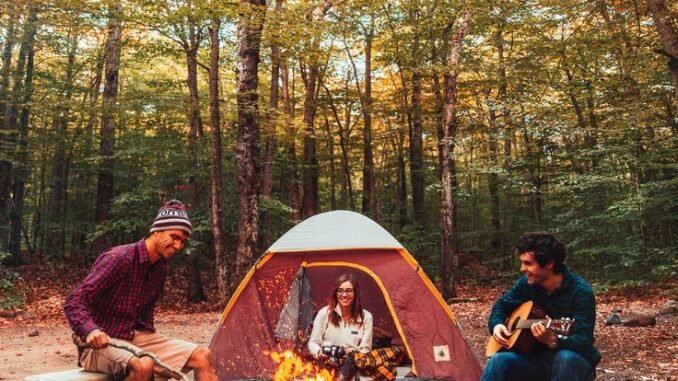
Fall is one of the most magical times of the year to sleep under the stars. The summer crowds are gone, the bugs have finally died down, and the forest puts on a show of red, gold, and orange that no summer trip can match. But fall camping is not the same as a warm-weather weekend getaway. Temperatures can swing forty degrees between afternoon and midnight, rain can roll in without warning, and the sun sets earlier every single day. The campers who thrive in autumn are not the toughest ones — they are the best prepared.
This guide walks you through the twenty essentials that make fall camping comfortable, safe, and genuinely enjoyable. From your sleep system and clothing layers to cooking gear, lighting, and wildlife safety, every item on this list earns its place in your pack. Whether this is your first autumn trip or your fiftieth, use this checklist to make sure nothing important gets left behind. The forest in fall rewards the prepared camper with crisp mornings, golden light, and the quietest campsites of the year — let us make sure you are ready for all of it.
A Sturdy Three-Season Tent

Your tent is your first line of defense against fall weather, so choose it wisely. A quality three-season tent handles the wind, rain, and chilly nights of autumn without the bulk and weight of a true winter mountaineering tent. Look for a full-coverage rainfly that reaches close to the ground — this blocks driving rain and cuts down on cold drafts that sneak under a partial fly on frosty nights.
Ventilation matters just as much in fall as it does in summer. Cold air meeting your warm breath creates condensation inside the tent, and waking up in a damp sleeping bag is a miserable way to start a frosty morning. Pitch your tent with the vents open whenever possible, and avoid camping in low hollows where cold air and moisture settle overnight. Bring a small tube of seam sealer and a few extra guylines, because fall storms can arrive fast and hit hard.
A Cold-Weather Sleeping Bag

The single most important comfort item on a fall trip is a sleeping bag rated for the coldest temperature you might face — not the average. Fall nights routinely drop into the thirties or lower, and a bag rated only for summer will leave you shivering at 3 a.m. Check the bag’s comfort rating rather than its extreme survival rating, and choose a bag rated at least ten degrees colder than the forecast low to give yourself a safety margin.
Down insulation packs small and insulates beautifully, but it loses warmth when damp, so it demands careful handling in wet fall weather. Synthetic insulation is bulkier but keeps you warm even when wet, which makes it a forgiving choice for beginners. On the trip, never crawl into your bag wearing damp clothes. A sleeping bag liner adds several degrees of warmth for very little weight, and it keeps your bag cleaner.
An Insulated Sleeping Pad

Many campers obsess over their sleeping bag and completely ignore what is underneath them — but the cold ground steals more body heat than the night air. An insulated sleeping pad with a high R-value is non-negotiable for fall camping. The R-value measures resistance to heat loss, and for autumn trips you want a pad rated R-4 or higher, which handles ground temperatures near freezing without letting the cold seep into your bones.
Closed-cell foam pads are cheap, indestructible, and immune to punctures, but they are bulky. Inflatable insulated pads pack down small and feel far more comfortable, though they cost more and need a patch kit along for the ride. Whichever system you use, inflate your pad fully and check for slow leaks before dark — discovering a flat pad at midnight is a special kind of misery.
Moisture-Wicking Base Layers

The foundation of every fall layering system is a good base layer, and its job is simple: move sweat away from your skin before it can chill you. Cotton is the enemy here — it absorbs moisture, holds it against your body, and turns into a cold, clammy liability once the temperature drops. Merino wool and synthetic polyester base layers wick moisture, dry quickly, and keep insulating even when damp.
Pack at least two sets: one for daytime activity and one kept sacredly dry for sleeping. The sleep set should go into a dry bag the moment you arrive at camp and stay there until bedtime — crawling into a bag in dry thermals is one of the simplest and most effective warmth tricks in camping. Fit should be snug but not restrictive, since a base layer only works when it sits against your skin.
A Warm Insulated Mid-Layer

Between your base layer and your shell sits the workhorse of fall comfort: the insulated mid-layer. A puffy down or synthetic jacket traps warm air around your core and can be pulled on in seconds when the sun drops behind the ridge or the wind picks up. Down offers the best warmth for its weight and compresses to almost nothing, while synthetic insulation keeps working through drizzle and damp campfire-side evenings.
The real value of a puffy jacket is how it extends your comfortable hours at camp. Mornings and evenings are the coldest parts of a fall day, and they are also the most social — nobody wants to retreat to the tent at 6 p.m. because they are cold. A warm mid-layer lets you linger around the fire, cook dinner slowly, and watch the stars come out. Choose a jacket with a hood, since the head and neck leak heat fast, and make sure it fits over your other layers without compressing the insulation. A stuff sack keeps it protected in your pack, and many campers use their puffy as a pillow at night for double duty.
A Waterproof Rain Shell

Fall weather is famously unpredictable, and a waterproof rain shell is the piece of gear that turns a ruined trip into a merely damp one. A good shell blocks wind and rain while letting sweat vapor escape, which keeps you dry from both directions. Look for sealed seams, a storm flap over the main zipper, an adjustable hood that moves with your head, and pit zips for dumping heat when you are hiking uphill in a drizzle.
Do not confuse water-resistant with waterproof. A light windbreaker will wet through in sustained fall rain, leaving you chilled to the bone. A true waterproof-breathable shell with a durable water repellent coating is worth the investment, and it doubles as your wind layer on dry but blustery days. Keep the shell accessible at the top of your pack rather than buried at the bottom — fall showers often arrive with only minutes of warning. Pair it with rain pants on truly wet days, because a dry torso over soaked legs is still a recipe for misery.
Sturdy Waterproof Boots

Fall trails are a minefield of cold mud, frost-covered roots, hidden puddles, and wet leaves that turn every descent into a slip-and-slide. Sturdy waterproof boots with aggressive tread are essential for staying upright and keeping your feet dry. Look for boots with a waterproof-breathable membrane, a supportive midsole for rocky terrain, and lugs deep enough to bite into mud and leaf litter.
Break your boots in before the trip — stiff new boots plus long fall hikes equals blisters, and blisters in cold weather are harder to manage because you cannot simply air your feet out. Wear them around town and on short walks for at least two weeks beforehand. At camp, loosen the laces completely so your feet can breathe and blood can circulate, which keeps toes warmer. Never put boots too close to the campfire to dry; intense heat cracks leather and delaminates soles. Bring camp shoes — lightweight slip-ons or sandals — so your boots can rest and your feet can recover each evening.
Warm Wool Socks

Cold feet will ruin a fall camping trip faster than almost anything else, and the fix is beautifully simple: good wool socks, and plenty of them. Merino wool socks cushion your feet, wick moisture, regulate temperature, and resist odor far better than cotton, which should never go on a fall hiker’s feet. Pack at least three pairs for a weekend trip — one for hiking, one dry pair for camp, and one emergency backup.
The camp pair deserves special protection. Change into dry socks the moment you finish hiking for the day, even if your hiking socks do not feel that wet — your feet sweat more than you realize. Sleep in a fresh dry pair, since warm feet help your whole body stay warm overnight.
A Reliable Camp Stove

In summer you might get away with cooking everything over a campfire, but fall demands a reliable camp stove. Wet wood, fire bans, and early darkness make open-fire cooking unreliable just when you need hot food the most. A two-burner propane stove gives you real cooking power: coffee and oatmeal going at the same time on a frosty morning, or a proper hot dinner when the sun sets at six.
Canister stoves are light and simple for backpackers, while larger two-burner stoves suit car campers who want to cook real meals. Whichever you choose, test it at home before the trip and always bring more fuel than you think you need — cold weather makes stoves burn fuel faster. Pack a lighter plus waterproof matches as backup ignition, because piezo igniters have a habit of failing in the cold.
Cast-Iron Cookware

Fall is the season of hearty campfire cooking — stews, chilis, cobblers, and slow-simmered one-pot meals that taste better when the air is crisp. Cast-iron cookware, especially a dutch oven, is the perfect tool for this kind of cooking. Cast iron holds heat evenly, goes directly into campfire coals, and turns simple ingredients into deeply satisfying meals that warm you from the inside out.
A twelve-inch dutch oven with a lid handles everything from breakfast hash to peach cobbler, and a cast-iron skillet covers frying duty. Season your cast iron before the trip and bring a little oil, a stiff brush, and paper towels for cleaning — never use soap on the trail unless you plan to re-season when you get home.
Headlamps and Lanterns

The sun sets earlier every day in fall, which means you will spend far more hours in the dark than on a summer trip. A headlamp for every person is the single most important lighting essential — it keeps your hands free for cooking, setting up the tent, and navigating to the bathroom at 2 a.m. Choose one with a red-light mode, which preserves your night vision and does not blind your campmates, plus a lockout feature so it does not switch on inside your pack and drain the battery.
Add a lantern or two for ambient campsite light. A lantern hung from the tent ceiling or set on the picnic table creates a warm pool of light that makes evening hours genuinely pleasant instead of a race against darkness. Test every light before you leave home, and establish the habit of keeping your headlamp in the same pocket every time so you can find it instantly after dark.
Fire Starters and Tinder

A campfire is the heart of fall camping — it is your heater, your dryer, your kitchen, and your entertainment all in one. But fall wood is often damp, and nothing kills the mood like forty-five minutes of failed fire-starting in the cold. Pack dedicated fire starters and never rely on finding dry tinder in a wet autumn forest. Commercial starters, cotton balls soaked in petroleum jelly, and wax-coated wood shavings all ignite reliably even in damp conditions.
Build your fire the right way: a bed of tinder, a teepee of pencil-thin kindling, then progressively larger sticks as the flames take hold. Split larger logs to expose the dry interior wood, since the outside of every log in fall carries moisture. Keep your firewood covered with a tarp at camp so it stays dry for the evening burn.
A Well-Stocked First-Aid Kit

Fall brings its own set of minor medical risks: slippery trails, cold-related issues, and shorter days that rush every activity. A well-stocked first-aid kit tailored to camping is essential, not optional. Beyond the basics — adhesive bandages, gauze, antiseptic wipes, medical tape, tweezers, and pain relievers — add items for fall-specific problems: blister treatment for wet-boot hikes, elastic wrap for twisted ankles on leaf-covered trails, and chemical hand warmers that double as emergency warmth.
Know how to use everything in the kit before you need it. Take ten minutes at home to open each item and read the instructions, because fumbling with unfamiliar packaging in the dark is stressful. Add any personal medications plus a small surplus, and include an emergency whistle and a space blanket — both weigh almost nothing and can be lifesavers.
Map, Compass, and Navigation Tools

Fall transforms familiar trails. Fallen leaves hide blazes, roots, and junctions; fog and early darkness cut visibility; and snow can erase the path entirely at higher elevations. A paper map and a compass are essential backups that never run out of battery, lose signal, or freeze in the cold. Download offline maps to your phone as well, but treat electronics as a convenience and the paper map as your real plan.
Before the trip, study the route and note bailout points, water sources, and landmarks. At every trail junction, stop and confirm your position on the map rather than guessing — most lost-hiker stories start with a confident wrong turn. Mark your car’s location and the trailhead on the map when you arrive.
An Insulated Water Bottle

Staying hydrated in cool weather is trickier than in summer because you do not feel as thirsty — but your body still loses moisture with every breath in cold, dry air. An insulated water bottle keeps drinking water from turning ice-cold and, just as importantly, keeps hot drinks hot for hours. Fill it with tea, coffee, or hot chocolate in the morning and you have a portable hand warmer and morale booster for the whole hike.
Double-wall vacuum insulation is the key feature to look for, and a wide mouth makes the bottle easier to fill, clean, and drink from with gloves on. In freezing temperatures, store the bottle upside down overnight so ice forms at the bottom rather than sealing the lid shut. A water filter or purification tablets round out the system for longer trips.
A Cozy Camp Chair and Blanket

Fall evenings are long, and you will spend hours of them sitting around the campfire — so do it in comfort. A sturdy camp chair with good back support beats a log or a cold rock every time, and insulated or padded chairs add real warmth on chilly nights. Look for a chair rated for your weight with a stable base that will not sink into soft autumn ground.
Pair the chair with a dedicated camp blanket: a warm fleece, wool, or insulated throw that lives at the fireside. Drape it over your legs while you eat dinner and wrap it around your shoulders for stargazing. Shake the blanket out each morning to remove ash and leaves.
Secure Food Storage for Wildlife Country

Fall is hyperphagia season — bears and other wildlife are eating relentlessly to fatten up for winter, which makes secure food storage more important now than at any other time of year. Never keep food, toiletries, or anything scented in your tent. Use bear canisters where required, hang food bags properly where hanging is the norm, and use campground food lockers wherever they are provided.
A proper bear hang suspends your food bag at least twelve feet off the ground and five feet from the trunk, but honestly, a hard-sided canister is simpler and more reliable — set it on the ground well away from your tent and sleep easy. Cook and eat at least a hundred feet from where you sleep so food smells do not soak into your campsite, and change out of the clothes you cooked in before bed. Pack all trash out in sealed bags, including food scraps.
A Multi-Tool or Camp Knife

A good multi-tool or camp knife is the problem-solver of the campsite, handling a hundred small jobs you cannot predict in advance. Cutting cord, shaving tinder, opening packages, tightening a loose stove fitting, slicing cheese for trail snacks — the list goes on. For fall camping specifically, a knife earns its keep processing kindling and feathering sticks for fire-starting when everything is damp.
Choose a tool with a locking blade for safety, since cold stiff fingers and folding blades are a bad combination. A saw blade is genuinely useful for cutting wrist-thick branches, and pliers handle hot pot lids and gear repairs. Keep the blade sharp — a dull knife is more dangerous than a sharp one because it forces you to push harder and slip. Store the tool somewhere accessible but secure, and clean and dry it each evening, because fall moisture rusts neglected steel fast.
A Portable Power Bank

Your phone is your camera, map, flashlight backup, and emergency communication device — and cold weather drains its battery with ruthless efficiency. A high-capacity portable power bank keeps everything charged through a long fall weekend. Look for at least 10,000 mAh of capacity, which typically recharges a phone two to three times, and built-in cables mean one less thing to forget.
Batteries of all kinds perform poorly in the cold, so keep the power bank itself warm: stash it in a jacket pocket during the day and in your sleeping bag at night. Charge devices during the warmest part of the day for best efficiency, and switch your phone to airplane or battery-saver mode when you do not need it.
A Hammock for Leaf-Peeping Lounging

Not every essential is about survival — some are about joy, and a hammock might be the most joyful piece of fall camping gear ever invented. There is no better way to experience peak foliage than swaying gently between two trees while golden leaves drift down around you. A lightweight camping hammock packs down to the size of a water bottle and sets up in minutes with tree-friendly straps.
For fall, add an underquilt or a sleeping pad inside the hammock, because the cold air circulating underneath will chill you fast without bottom insulation. Always use wide tree straps rather than thin rope to protect bark, and hang the hammock with a gentle sag for the most comfortable lay.
Fall camping asks a little more of you than summer does, but it gives back so much more: empty trails, blazing color, crisp air, and campfires that actually feel necessary. Work through this checklist before every autumn trip, and you will spend less time fighting the cold and more time enjoying the season at its absolute best. The forest is putting on its finest show of the year — with these twenty essentials packed, you will not miss a moment of it.
Leave a Reply