
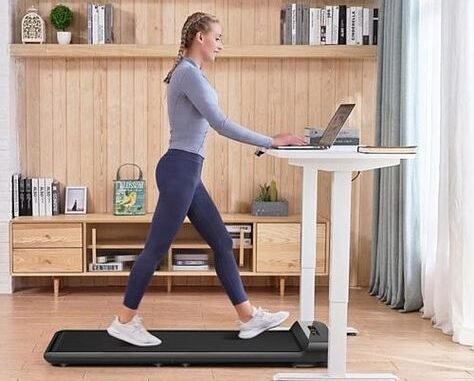
Walking pad workouts have quietly become one of the biggest fitness trends of the decade, and it is easy to see why. These slim, portable treadmills slide under a desk, tuck beside a couch, or fold flat against a wall, turning dead time into active time. Whether you want to burn calories while answering emails, squeeze in cardio during a TV episode, or simply hit your daily step goal without leaving the house, a walking pad makes it possible. In this guide, you will find everything you need to get started and stay motivated: the best beginner routines, fat-burning intervals, incline sessions, desk-walking tips, safety advice, and a full four-week plan. Lace up your sneakers and let’s walk through it together.
Why Walking Pad Workouts Are Booming Right Now
The walking pad boom did not happen by accident. Remote and hybrid work left millions of people sitting for eight to ten hours a day, and the health consequences of that much sitting are well documented, from stiff joints to sluggish metabolism and poor sleep. A walking pad solves the problem without demanding extra hours: you move while you work, watch, or scroll. Social media amplified the trend, with creators posting their step counts, under-desk setups, and weight-loss results, which made the idea feel achievable rather than extreme. Prices have also dropped significantly, putting a decent walking pad within reach of most budgets. Add in compact, foldable designs that fit small apartments, and you have a fitness tool with almost no barriers. Walking pad workouts meet people where they already are, which is exactly why they have stuck around while other fads faded.

What Exactly Is a Walking Pad (and How It Differs From a Treadmill)
A walking pad is essentially a stripped-down treadmill built for walking rather than running. It has no tall console, no handlebars, and no bulky frame; just a low-profile belt deck, usually controlled by a remote or a phone app. Most top out between 3.5 and 5 miles per hour, which covers a comfortable walk up to a brisk power walk. Traditional treadmills, by contrast, are bigger, heavier, louder, and built for running speeds with incline motors and display consoles. Walking pads trade those features for portability: many weigh under 60 pounds, fold in half, and roll under a bed. The belt is also narrower and shorter, so they suit walking gaits rather than running strides. If your goal is running training, buy a treadmill. If your goal is stacking thousands of low-impact steps into an ordinary day, a walking pad is the smarter, cheaper, quieter choice.

The Real Health Benefits of Daily Walking Pad Sessions
Walking is one of the most studied forms of exercise, and doing it on a pad delivers the same core benefits as walking outdoors. Regular sessions strengthen your heart, help regulate blood pressure, and improve circulation in your legs, which matters enormously if you sit all day. For weight management, a 160-pound person burns roughly 200 to 300 calories per hour walking at a moderate pace, and those calories add up fast when you walk two or three hours across a workday. Beyond the physical side, walking is a proven mood lifter: rhythmic movement reduces cortisol, eases anxiety, and many people report sharper focus and better ideas while walking. Sleep quality often improves too, since daytime movement helps regulate your circadian rhythm. The real magic of walking pad workouts is consistency. A perfect workout you skip helps no one; an easy walk you actually do every day changes everything.

Setting Up Your Walking Pad for Maximum Comfort
A good setup makes the difference between a walking pad you use daily and one that becomes an expensive clothes rack. Start with placement: you need a flat, hard surface and enough clearance around the belt, ideally a few feet behind you in case you drift. If you plan to walk while working, your desk height matters enormously. A standing desk is ideal; your elbows should rest at roughly 90 degrees while typing, which usually means the desk surface sits at or slightly below elbow height while you stand on the pad. Add an anti-fatigue mat under the pad to cut noise and vibration, especially in apartments. Keep water within arm’s reach, position your monitor at eye level to protect your neck, and use the remote or app to change speeds without looking down. Small comfort upgrades like these remove every excuse not to step on.

The Perfect Beginner Walking Pad Workout (15 Minutes)
If you are new to walking pad workouts, start with this gentle fifteen-minute session that teaches your body the rhythm without overwhelming it. Minutes zero to three: walk at an easy 1.5 to 2 miles per hour, focusing on relaxed shoulders and natural arm swing. Minutes three to eight: raise the pace to 2.5 miles per hour, a purposeful walk where you can still hold a conversation. Minutes eight to twelve: nudge up to 3 miles per hour for a brisk stretch that gets your heart rate into a light cardio zone. Minutes twelve to fifteen: drop back to 1.5 miles per hour and let your breathing settle. Do this once a day for your first week, and pay attention to your feet, knees, and lower back. Mild muscle awareness is normal; sharp pain is not. Once this feels easy, you are ready for longer or faster sessions.

The 30-Minute Fat-Burning Walking Pad Routine
When you are ready for a real calorie-burning session, this thirty-minute routine delivers. Warm up for five minutes at 2 miles per hour, letting your joints loosen and your heart rate rise gradually. Then move into the main set: alternate three minutes at 3.5 miles per hour with two minutes at 2.5 miles per hour, repeating that cycle four times for twenty minutes of work. The faster intervals should feel challenging but sustainable, roughly a seven out of ten effort where talking takes some concentration. Finish with a five-minute cool-down at 2 miles per hour, slowing your breathing and letting your heart rate descend. Done three to five times per week, this session can burn 150 to 250 calories depending on your weight and pace. The alternating structure keeps it mentally engaging, and the built-in recovery means beginners can finish it without hitting a wall.

Interval Walking: The Fastest Way to Boost Fitness
Interval training is not just for runners. Alternating fast and slow walking on your pad trains your cardiovascular system far more efficiently than steady walking alone, and research consistently shows intervals improve aerobic fitness, insulin sensitivity, and calorie burn in less time. A simple starter pattern is the 1-2 method: one minute brisk at 3.5 to 4 miles per hour, then two minutes easy at 2 miles per hour, repeated for twenty minutes. As fitness improves, flip the ratio to two minutes fast and one minute easy, or add short thirty-second surges at your top comfortable speed. The key is honest effort during the fast segments; you should feel your breathing deepen and your legs work. Intervals also break the monotony that kills consistency. Twenty focused minutes of intervals can deliver benefits that rival forty-five minutes of casual strolling, making them perfect for packed schedules.

Incline Walking Pad Workouts for Glutes and Legs
If your walking pad has an incline feature, you own a secret weapon for lower-body strength. Walking uphill forces your glutes, hamstrings, and calves to work dramatically harder than flat walking, and it raises your heart rate without requiring faster speeds that might feel unstable. Try this twenty-minute incline session: five minutes flat at 2.5 miles per hour to warm up, then eight rounds of one minute at a 5 to 8 percent incline followed by one minute flat, all at 2.5 to 3 miles per hour, and finish with a three-minute flat cool-down. Focus on driving through your heels and keeping your torso tall rather than leaning into the slope. No incline feature? Mimic the effect with high-knee marching intervals or slow, exaggerated steps. Incline walking is also joint-friendly intensity, since the workload rises while impact stays low, making it ideal for anyone who wants a harder workout without pounding.

Walking Pad Workouts for Weight Loss: What Actually Works
Walking pads can absolutely support weight loss, but only as part of a realistic strategy. The math is straightforward: a daily one-hour walk at a moderate pace burns roughly 200 to 350 calories, and sustained over weeks, that creates a meaningful deficit when paired with sensible eating. What makes walking pads uniquely effective for weight loss is volume. Because you can walk while working or watching TV, many users accumulate two to four hours of movement daily, far more than a single gym session provides. That said, walking alone rarely overcomes a poor diet, so keep expectations honest. Track your sessions, aim for progressive overload by gradually increasing speed, duration, or incline each week, and weigh yourself no more than weekly to avoid noise-driven discouragement. The people who lose weight with walking pads share one trait: they made walking a non-negotiable daily habit rather than an occasional workout.

Desk Walking: How to Work and Walk at the Same Time
Walking while working sounds distracting until you try it; most people adapt within a few days. The trick is matching the task to the pace. At 1 to 2 miles per hour, you can comfortably handle emails, video calls, reading, and routine computer work. Save intense writing or detailed analysis for slower speeds or seated breaks, since fine motor tasks suffer first. Start with just thirty minutes of desk walking per day and add fifteen minutes each week until you find your sweet spot, which for most people lands between two and four hours daily. Keep a pair of flat, supportive shoes at your desk, since walking in heels or stiff dress shoes is miserable. Use a headset for calls to avoid hunching over a laptop, and position your keyboard so your wrists stay neutral. Many desk walkers report that light movement actually sharpens afternoon focus, replacing the post-lunch slump with steady energy.

Walking Pad Workouts for Seniors and Low-Impact Needs
Walking pads are genuinely excellent for older adults and anyone who needs joint-friendly exercise, because the belt is cushioned, the pace is fully controllable, and there is no weather or uneven terrain to navigate. Start very conservatively: ten minutes at 1 to 1.5 miles per hour, holding a sturdy desk or placing the pad near a wall for balance support during the first sessions. Gradually extend duration before increasing speed; twenty to thirty minutes of gentle walking delivers most of the cardiovascular and mobility benefits. Stop immediately if you feel dizzy, chest discomfort, or joint pain, and check with a doctor before starting if you manage a heart condition, severe arthritis, or balance disorders. The low impact is the point: walking pads let seniors build leg strength, protect bone density, and maintain independence without the fall risk of outdoor walks or the intimidation of a gym.

Strength Moves You Can Do on a Walking Pad
A walking pad is not just for cardio; it doubles as a platform for creative strength work. With the belt stopped or moving very slowly, try these moves: walking lunges, stepping forward into a deep lunge with each stride to fire up your quads and glutes; side shuffles, facing sideways and stepping laterally to challenge your hip stabilizers; and calf raises, rising onto your toes with every few steps. For upper body, carry light dumbbells of two to five pounds while walking, adding shoulder presses or bicep curls during your session. A resistance band looped under the pad works for rows and chest presses while you march in place. Always prioritize balance: hold a desk edge when trying a new move, keep speeds under 2 miles per hour for anything fancy, and stop the belt entirely for exercises that need a stable base. These hybrids turn a simple walk into genuine full-body training.

Posture Fixes: Avoiding the Walking Pad Slouch
The most common walking pad mistake is not speed or duration; it is posture. Hours of walking while staring down at a laptop screen will round your shoulders, crane your neck, and strain your lower back, undoing much of the good. Fix it with a simple checklist: screen top at or just below eye level, shoulders relaxed and pulled slightly back, core lightly engaged as if bracing for a gentle poke, and chin parallel to the floor rather than jutting forward. Your foot strike should land beneath your hips, not far ahead of you, which means shortening your stride as speed rises. If you catch yourself gripping an imaginary handrail or leaning on the desk, slow down; you are going faster than your balance allows. A quick posture reset every fifteen minutes, rolling your shoulders and tucking your chin, keeps small misalignments from becoming painful habits over weeks of daily use.

How Many Steps and Calories: Setting Realistic Targets
Numbers keep you honest, so set targets that stretch you without setting you up to quit. For general health, the famous 10,000-step goal is a fine aspiration, but research shows benefits climb steeply up to about 7,000 to 8,000 steps, with diminishing returns beyond that. A practical walking pad target is 60 to 120 minutes of walking daily, which typically yields 6,000 to 12,000 steps depending on pace. Calorie burn varies with body weight and speed: expect roughly 150 calories per hour at a slow stroll, 250 at a moderate pace, and 350 or more during brisk intervals if you weigh around 170 pounds. Track with your pad’s app, a fitness watch, or even a simple notebook, and review weekly rather than daily to see real trends. Most importantly, tie targets to your life: a remote worker can aim higher than someone squeezing sessions around a commute.

The 12-3-30 Style Walking Pad Challenge
The viral 12-3-30 treadmill workout, twelve percent incline, three miles per hour, thirty minutes, can be adapted for walking pads, with one caveat: most pads cannot hit a twelve percent incline or sustain 3 mph comfortably for everyone. The adapted version works like this: set your pad to its maximum incline, walk at 2.5 to 3 miles per hour, and hold it for twenty to thirty minutes, hands off the desk to force your core and glutes to stabilize you. This is a serious workout, so build up over two weeks, starting with ten minutes and adding five each session. Do it two or three times per week, never on consecutive days at first, since incline walking hammers your calves and Achilles tendons. Runners-up variations include a flat-speed version at 3.5 to 4 mph for pads without incline. Treat it as a four-week challenge, track how your endurance improves, and you will understand exactly why the original went viral.

Entertainment Pairings: Podcasts, Shows, and Calls While You Walk
Boredom is the top killer of walking pad consistency, so pair your steps with entertainment you genuinely look forward to. The golden rule: reserve your favorite podcast, audiobook, or streaming series exclusively for walking pad time, creating a craving that pulls you onto the belt. True-crime podcasts and gripping audiobooks are legendary step-count boosters because you keep walking to hear what happens next. For video, mount a tablet at eye level and save a specific show as your walking-only series; thirty-minute sitcom episodes map perfectly onto workout sessions. Phone calls with friends or family also fly by, and walking meetings are increasingly normal in remote work culture. Keep volume at a level where you can hear the belt and your surroundings, and avoid content so intense it wrecks your posture. When entertainment and exercise fuse into one habit, willpower stops being the limiting factor.

Walking Pad Safety Tips Everyone Should Know
Walking pads are safe when respected and risky when treated casually, so lock in these habits from day one. Always use the safety clip or emergency stop cord if your model includes one; attach it to your clothing so the belt halts if you stumble. Start the belt only after you are standing on the side rails, then step on once it is moving slowly, and reverse the process to stop. Never step on or off at high speed, and keep children and pets away from the belt, since small fingers and paws are drawn to moving machinery. Wear proper athletic shoes rather than socks or bare feet, which slip and offer no support. Keep the area behind the pad clear so a misstep does not launch you into furniture, and avoid looking at your phone while walking fast. These rules take seconds to follow and prevent nearly every common walking pad injury.

Maintenance: Keeping Your Walking Pad Running Smoothly
A walking pad is a simple machine, and ten minutes of monthly maintenance keeps it humming for years. The belt needs periodic lubrication with silicone oil, usually every three months or forty hours of use; check your manual, since a dry belt strains the motor and feels sluggish. Keep the belt centered by adjusting the rear roller bolts a quarter turn at a time if it drifts left or right, and wipe sweat off the deck after intense sessions to protect the electronics. Vacuum or wipe dust from around the motor cover, because dust buildup is a quiet killer of small motors. Store the pad flat or folded as designed, never leaning heavy objects on the belt, and unplug it during long absences. Listen for new noises: squeaking often means the belt needs lube, while grinding warrants a support call. Treat it like the appliance it is, and it will outlast your fitness resolutions.

Building a 4-Week Walking Pad Workout Plan
Structure turns random walks into real progress. Here is a four-week plan that builds fitness safely. Week one is about habit: walk twenty minutes daily at an easy pace, focusing on consistency over intensity. Week two adds duration: extend to thirty minutes, and include two interval sessions of one minute brisk and two minutes easy. Week three introduces variety: keep the daily thirty minutes, but make two sessions incline walks and one a forty-minute endurance walk. Week four consolidates: aim for forty minutes most days, with two interval sessions and one incline challenge. Schedule one full rest day per week from the start, and if any week feels too hard, repeat it before advancing. Track your total weekly minutes and average speed; watching those numbers climb is powerful motivation. By week four, most people find walking feels automatic rather than effortful.

Staying Consistent: Making Walking Pad Workouts a Habit
The best walking pad workout plan is the one you will still be doing in six months, and that comes down to habit design, not motivation. Anchor walking to existing routines: step on the pad during your morning coffee, your daily standup meeting, or the first episode after dinner. Make starting effortless by leaving the pad unfolded in its spot with shoes beside it; every barrier you remove doubles the odds you begin. Track streaks rather than perfection, using a calendar where you mark each walking day, because nobody wants to break a twenty-day chain. Plan for disruption too: travel, illness, and busy weeks happen, so define a minimum viable session, even ten slow minutes, that keeps the streak alive. Finally, revisit your why monthly. Whether it is energy, weight, mood, or longevity, reconnecting with your reason turns a fading novelty into a permanent part of how you live.

Leave a Reply